Florida Hurricane History
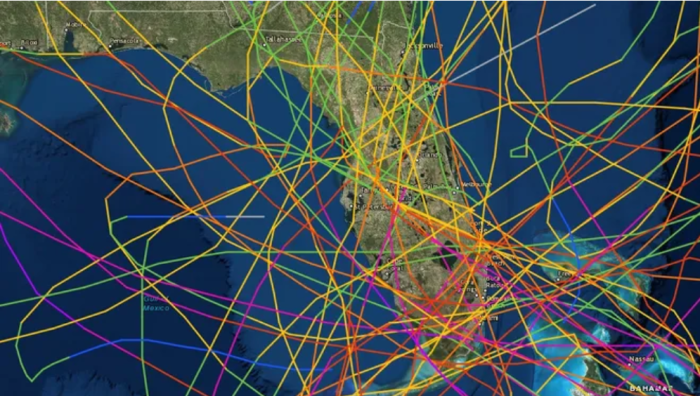
Florida hurricane history no doubt goes back millions of years.
The original native Americans probably learned to live with them
just like their modern successors of today.
I was introduced to the power of these storms by Hurricane Donna
in 1960. I had only been in Florida for a few months. It was
an impressive storm, and I learned to respect hurricanes from
that early encounter.
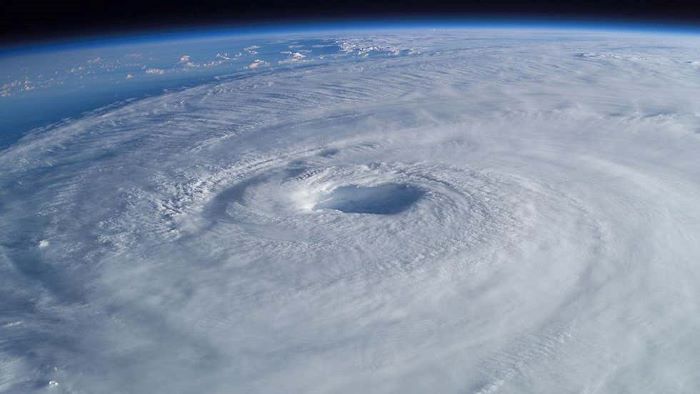
We Floridians love our state, but we know that hurricanes will always be a way of life. You think we'd be ready and prepared for each one, but each one seems to bring a new learning experience.
Most long time Floridians have their own personal Florida hurricane history, and I am no exception. I remember many of these hurricanes, and was too close for comfort for a few of them.
These are the hurricanes I know of in "modern" Florida. The
descriptions of the storms have been taken from the website of
the National Hurricane Center in Miami, Florida.
Here is the Florida Hurricane History as I know it.
Florida Hurricane History: 1919 ATLANTIC GULF HURRICANE

This fearsome cyclone was first detected near the Lesser
Antilles on September 2. It is included in Florida hurricane history because it smashed into the Dry Tortugas west of Key West. It moved generally west-northwestward for several days, passing near the Dominican Republic on September 4 and into the southeastern Bahamas on the 5th and 6th. At that time it became a hurricane. A westward turn on September 7 took the center across the central Bahamas on the 7th and 8th and into the Straits of Florida and Florida hurricane history on the 9th.
The now large hurricane was of Category 4 intensity as the eye passed just south of Key West, Florida and the Dry Tortugas on
September 10. A continued west to west-northwestward motion
brought the center to the Texas coast south of Corpus Christi as
a Category 3 hurricane on September 14. The cyclone dissipated
over northern Mexico and southern Texas the next day.
Although hurricane-force winds occurred over the Florida Keys
and the central and south Texas coast, no reliable wind
measurements are available from near the center. A storm surge
of up to 12 ft inundated Corpus Christ, Texas causing major
damage to the coastal areas. A ship moored near the Dry Tortugas
measured a pressure of 27.37 inches as the center passed, and
based on this, the storm is ranked as the third most intense to
hit the United States. It is included in Florida hurricane history because of the impact on the Dry Tortugas.
The death toll was estimated at 600 to 900 people. Of these,
more than 500 were lost on ten ships that either sunk or were
reported missing. Damage in the United States was estimated at
$22 million.
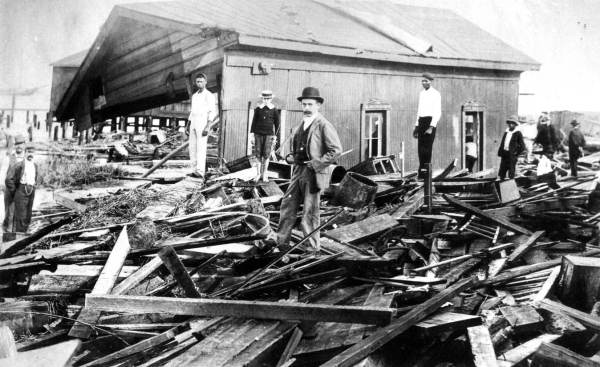
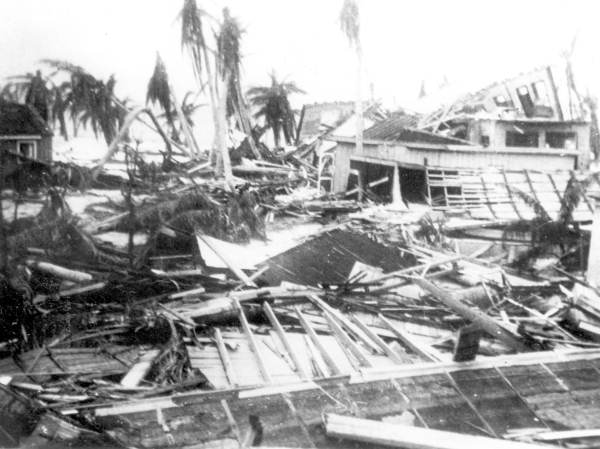
Florida Hurricane History: 1926 MIAMI HURRICANE

This is the awful hurricane that all but stopped the Florida
Land Boom in its tracks. Miami history and the history of
Florida would be affected for all time. Florida hurricane history has a special place in its hall of fame for this one.
The "Great Miami" Hurricane, as it is known in Florida hurricane history, was first spotted as a tropical wave located 1,000 miles east of the Lesser Antilles on September 11th. The system moved quickly westward and intensified to hurricane strength as it moved to the north of Puerto Rico on the 15th.
Winds were reported to be nearly 150 mph as the hurricane passed over the Turks Islands on the 16th and through the Bahamas on the 17th. Little in the way of meteorological information on the approaching hurricane was available to the Weather Bureau in Miami. As a result, hurricane warnings were not issued until midnight on September 18th, which gave the booming population of South Florida little notice of the impending disaster. This was typical of the communications problems in early Florida hurricane history.
The Category 4 hurricane's eye moved directly over Miami Beach
and downtown Miami during the morning hours of the 18th. This
cyclone produced the highest sustained winds ever recorded in
the United States and Florida hurricane history at the time.
The barometric pressure fell to 27.61 inches as the eye passed over Miami. A storm surge of nearly 15 feet was reported in Coconut Grove. Many casualties resulted as people ventured outdoors during the half-hour lull in the storm as the eye passed overhead. Most residents, having not experienced a hurricane, believed that the storm had passed during the lull.
They were suddenly trapped and exposed to the eastern half of the hurricane shortly thereafter. Every building in the downtown district of Miami was damaged or destroyed. The town of Moore Haven on the south side of Lake Okeechobee was completely flooded by lake surge from the hurricane. Hundreds of people in Moore Haven alone were killed by this surge, which left behind floodwaters in the town for weeks afterward.
This is a shameful period in Florida hurricane history as many of the people who were killed were trapped and had no place to escape to.
The hurricane continued northwestward across the Gulf of Mexico
and approached Pensacola on September 20th. The storm nearly
stalled to the south of Pensacola later that day and buffeted
the central Gulf Coast with 24 hours of heavy rainfall,
hurricane force winds, and storm surge. The hurricane weakened
as it moved inland over Louisiana later on the 21st. Nearly
every pier, warehouse, and vessel on Pensacola Bay was
destroyed.
The great hurricane of 1926 ended the economic boom in South
Florida and would be a $90 billion disaster had it occurred in
recent times. Economically, it would be the largest economic disaster in Florida hurricane history if it happened today.
With a highly transient population across southeastern Florida during the 1920s, the death toll is uncertain since more than 800 people were missing in the aftermath of the cyclone. A Red Cross report lists 373 deaths and 6,381 injuries as a result of the hurricane, among the worst in Florida hurricane history.
Florida Hurricane History: 1928 PALM BEACH-LAKE OKEECHOBEE HURRICANE

This classic Cape Verde hurricane was first detected over the
tropical Atlantic on September 10, although it likely formed
several days earlier. It moved westward through the Leeward
Islands on the 12th. It then turned west-northwestward, scoring
a direct hit on Puerto Rico on the 13th (the feast of San
Felipe) as a Category 4 hurricane. It then left Puerto Rico to become part of Florida hurricane history.
The hurricane continued west-northwestward through the Bahamas and made landfall near Palm Beach, Florida on September 16. It turned north-northeastward over the Florida Peninsula on the 17th, a motion which brought the remains of the storm to eastern North Carolina on the 19th. It then turned northward and merged with a non-tropical low over the eastern Great Lakes on September 20.
No reliable wind readings are available from near the landfall
area in Florida. However, Palm Beach reported a minimum pressure
of 27.43 in, making this the fourth strongest hurricane of
record to hit the United States. In Puerto Rico, San Juan
reported 144 mph sustained winds, while Guayama reported a
pressure of 27.65 inches. Additionally, a ship just south of St.
Croix, United States Virgin Islands (USVI) reported a pressure
of 27.50 inches, while Guadeloupe in the Leeward Islands
reported a pressure of 27.76 inches.
This hurricane caused heavy casualties and extensive destruction
along its path from the Leeward Islands to Florida. The worst
tragedy occurred at inland Lake Okeechobee in Florida, where the
hurricane caused a lake surge of 6 to 9 ft that inundated the
surrounding area.
This violent hurricane has a special place in Florida hurricane history. Its massive destruction finished off what the 1926 Miami hurricane had started.
1,836 people died in Florida, mainly due to the lake surge. An additional 312 people died in Puerto Rico, and 18 more were reported dead in the Bahamas. Damage to property was estimated at $50,000,000 in Puerto Rico and $25,000,000 in Florida. It is one of the worst storms in Florida hurricane history.
Florida Hurricane History: 1935 FLORIDA KEYS LABOR DAY HURRICANE

This system was first detected east of the central Bahamas on
August 29. Moving westward, it passed near Andros Island on
September 1, at which time it reached hurricane strength and
turned west-northwestward.
Phenomenal strengthening then occurred, and when the storm reached the middle Florida Keys on September 2, it was a Category 5 hurricane and destined to be one of the worst in Florida hurricane history.
After roaring through the Keys, the hurricane turned gradually northward almost parallel to the Florida west coast until it again made landfall near Cedar Key as a Category 2 hurricane on the 4th. A northeastward motion took the storm across the southeastern United States to the Atlantic coast near Norfolk, Virgina on September 6. It continued into the Atlantic, becoming
extratropical on the 7th and last being detected on the 10th.
No wind measurements are available from the core of this small,
but vicious hurricane. However, a pressure of 26.35 inches
measured at Long Key, Florida makes this the most intense
hurricane of record to hit the United States and the second most
intense hurricane of record in the Atlantic basin (surpassed
only by the 26.22 inches observed in Hurricane Gilbert in 1988).
The combination of winds and tides were responsible for 408
deaths in the Florida Keys, primarily among World War I veterans
working in the area. Damage in the United States was estimated
at $6 million.
This hurricane happened when Ernest Hemingway was living in Key
West. He was furious about the deaths of the World War I
veterans, and felt they should have been evacuated based on the knowledge of Florida hurricane history and its dangers.
Florida Hurricane History: 1960 HURRICANE DONNA

This monster happened a few months after I moved to Florida. It
gave me a valuable lesson. Never take the threat of a hurricane
lightly. I saw massive destruction in Naples and Jacksonville. Donna is part of the personal Florida hurricane history of many Floridians who lived in Naples and Jacksonville at the time.
One of the all-time great hurricanes, Donna was first detected
as a tropical wave moving off the African coast on August 29. It
became a tropical storm over the tropical Atlantic the next day
and a hurricane on September 1. Donna followed a general
west-northwestward track for the following five days, passing
over the northern Leeward Islands on the 4th and 5th as a
Category 4 hurricane and then to the north of Puerto Rico later
on the 5th. Donna turned westward on September 7 and passed
through the southeastern Bahamas. A northwestward turn on the
9th brought the hurricane to the middle Florida Keys the next
day at Category 4 intensity. Donna then curved northeastward,
crossing the Florida Peninsula on September 11, followed by
eastern North Carolina (Category 3) on the 12th, and the New
England states (Category 3 on Long Island and Categories 1 to 2
elsewhere) on the 12th and 13th. The storm became extratropical
over eastern Canada on the 13th.
In Florida hurricane history, Donna is the only hurricane of record to produce hurricane-force winds in Florida, the Mid-Atlantic states, and New England. It is not just a part of Florida hurricane history, but is remembered by people all along the Atlantic seaboard.
Sombrero Key, Florida reported 128 mph sustained winds with gusts to 150 mph. In the Mid-Atlantic states, Elizabeth City, North Carolina reported 83 mph sustained winds, while Manteo, North Carolina reported a 120 mph gust. In New England, Block Island, Rhode Island reported 95 mph sustained winds with gusts to 130 mph.
Donna caused storm surges of up to 13 ft in the Florida Keys and
11 ft surges along the southwest coast of Florida. Four to eight
ft surges were reported along portions of the North Carolina
coast, with 5 to 10 ft surges along portions of the New England
coast. Heavy rainfalls of 10 to 15 inches occurred in Puerto
Rico, 6 to 12 inches in Florida, and 4 to 8 inches elsewhere
along the path of the hurricane.
The landfall pressure of 27.46 inches makes Donna the fifth
strongest hurricane of record to hit the United States.
It was responsible for 50 deaths in the United States. One hundred and fourteen deaths were reported from the Leeward Islands to the Bahamas, including 107 in Puerto Rico caused by flooding from the heavy rains. The hurricane caused $387 million in damage in the United States and $13 million elsewhere along its path.
Many Floridians of that era include Donna in their own horrifying Florida hurricane history.
Florida Hurricane History: 1969 HURRICANE CAMILLE

This storm recalls another of my personal Florida hurricane history stories.
I was deep sea fishing off St. Pete Beach on the power catamaran "Double Eagle" a couple of days after this storm went by. The gulf was roiled up from the recent passage of Camille.
The catamaran had an unusual rolling motion. For the first time in my life, I got seasick. I was so sick the only thing that kept me alive was listening to the radio while the University of Florida football team destroyed Houston.
This powerful, deadly, and destructive hurricane formed just
west of the Cayman Islands on August 14. It rapidly intensified
and by the time it reached western Cuba the next day it was a
Category 3 hurricane. Camille tracked north-northwestward across
the Gulf of Mexico and became a Category 5 hurricane on August
16. The hurricane maintained this intensity until it made
landfall along the Mississippi coast late on the 17th. Camille
weakened to a tropical depression as it crossed Mississippi into
western Tennessee and Kentucky, then it turned eastward across
West Virginia and Virginia. The cyclone moved into the Atlantic
on August 20 and regained tropical storm strength before
becoming extratropical on the 22nd.
A minimum pressure of 26.84 inches was reported in Bay St.
Louis, Mississippi, which makes Camille the second most intense
hurricane of record to hit the United States. The actual maximum
sustained winds will never be known, as the hurricane destroyed
all the wind-recording instruments in the landfall area. The
estimates at the coast are near 200 mph. Columbia, Mississippi,
located 75 miles inland, reported 120 mph sustained winds. A
storm tide of 24.6 ft occurred at Pass Christian, Mississippi.
The heaviest rains along the Gulf Coast were about 10 inches.
However, as Camille passed over the Virginias, it produced a
burst of 12 to 20 inch rains with local totals of up to 31
inches. Most of this rain occurred in 3 to 5 hours and caused
catastrophic flash flooding.
The combination of winds, surges, and rainfalls caused 256
deaths (143 on the Gulf Coast and 113 in the Virginia floods)
and $1.421 billion in damage. Three deaths were reported in
Cuba.
Gulf coast natives have Camille filed away under their personal Florida hurricane history. It was a deadly one.
Florida Hurricane History: 1972 HURRICANE AGNES

The large disturbance that became Agnes was first detected over
the Yucatan Peninsula of Mexico on June 14. The system drifted
eastward and became a tropical depression later that day and a
tropical storm over the northwestern Caribbean on the 16th.
Agnes turned northward on June 17 and became a hurricane over
the southeastern Gulf of Mexico the next day. A continued
northward motion brought Agnes to the Florida Panhandle coast on
June 19 as a Category 1 hurricane. Agnes turned northeastward
after landfall and weakened to a depression over Georgia.
However, it regained tropical storm strength over eastern North
Carolina on June 21 and moved into the Atlantic later that day.
A northwestward turn followed, and a
just-under-hurricane-strength Agnes made a final landfall on the
22nd near New York, New York. The storm merged with a
non-tropical low on June 23rd, with the combined system
affecting the northeastern United States until the 25th.
Agnes was barely a hurricane at landfall in Florida, and the
effects of winds and storm surges were relatively minor. The
major impact was over the northeastern United States, where
Agnes combined with the non-tropical low to produce widespread
rains of 6 to 12 inches with local amounts of 14 to 19 inches.
These rains produced widespread severe flooding from Virginia
northward to New York, with other flooding occurring over the
western portions of the Carolinas.
Agnes caused 122 deaths in the United States. Nine of these were
in Florida (mainly from severe thunderstorms), adding to the losses of Florida hurricane history, while the remainder were associated with the flooding. The storm was responsible for $2.1 billion in damage in the United States, the vast majority of which came from the flooding. Agnes also affected western Cuba, where seven additional deaths occurred.
Florida Hurricane History: 1992 HURRICANE ANDREW

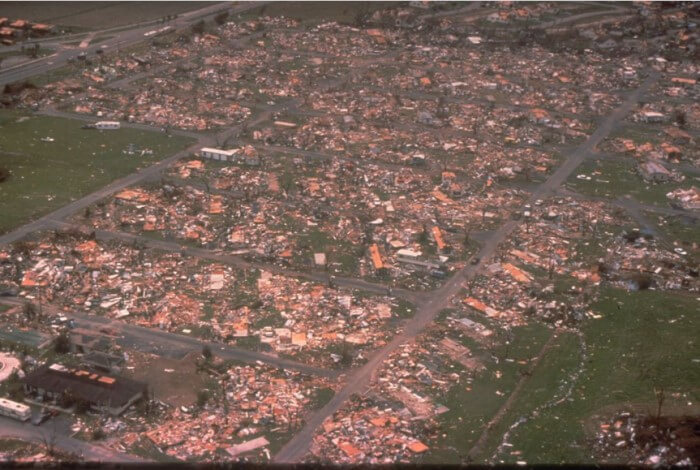
The most destructive event in Florida hurricane history started
modestly as a tropical wave that emerged from the west coast of
Africa on August 14. The wave spawned a tropical depression on
August 16, which became Tropical Storm Andrew the next day.
Further development was slow, as the west-northwestward moving
Andrew encountered an unfavorable upper-level trough. Indeed,
the storm almost dissipated on August 20 due to vertical wind
shear. By August 21, Andrew was midway between Bermuda and
Puerto Rico and turning westward into a more favorable
environment. Rapid strengthening occurred, with Andrew reaching
hurricane strength on the 22nd and Category 4 status on the
23rd. After briefly weakening over the Bahamas, Andrew regained
Category 4 status as it blasted its way across south Florida on
August 24. The hurricane continued westward into the Gulf of
Mexico where it gradually turned northward. This motion brought
Andrew to the central Louisiana coast on August 26 as a Category
3 hurricane. Andrew then turned northeastward, eventually
merging with a frontal system over the Mid-Atlantic states on
August 28.
Reports from private barometers helped establish that Andrew's
central pressure at landfall in Homestead, Florida was 27.23
inches, which makes it the third most intense hurricane of
record to hit the United States.
Andrew's peak winds in south Florida were not directly measured due to destruction of the measuring instruments, but these winds were considered to be among the highest in Florida hurricane history.
An automated station at Fowey Rocks reported 142 mph sustained winds with gusts to 169 mph (measured 144 ft above the ground), and higher values may have occurred after the station was damaged and stopped reporting. The National Hurricane Center had a peak gust of 164 mph (measured 130 ft above the ground), while a 177 mph gust was measured at a private home. Additionally, Berwick, LA reported 96 mph sustained winds with gusts to 120 mph.
Andrew produced a 17 ft storm surge near the landfall point in
Florida, while storm tides of at least 8 ft inundated portions
of the Louisiana coast. Andrew also produced a killer tornado in
southeastern Louisiana.
Andrew is responsible for 23 deaths in the United States and
three more in the Bahamas. The hurricane caused $26.5 billion in
damage in the United States, of which $1 billion occurred in
Louisiana and the rest in south Florida. The vast majority of
the damage in Florida was due to the winds. Damage in the
Bahamas was estimated at $250 million.
My personal Florida hurricane history with this storm started two weeks after Andrew hit. I moved to Miami from Melbourne to work on rebuilding the devastated community. I had an office in Homestead that housed some of the task force charged with rebuilding the area.
The devastation from Kendall down to Homestead was awful. Many
thousands of people were homeless for months. I lived on my
boat at Miami Beach Marina for one year in the aftermath of Andrew. There was no other housing available. It was one of the worst storms in Florida hurricane history.
Florida Hurricane History: 1994 TROPICAL STORM ALBERTO

Although "only" a tropical storm, Alberto is included in Florida hurricane history because it caused significant damage in the western Florida panhandle.
Alberto was first detected as a tropical wave that moved off the
African coast on 18 June. The wave moved into the western
Caribbean by late June and formed into a tropical depression
near the western tip of Cuba on June 30. The cyclone moved
northwest through July 1 as it became a tropical storm, then it
turned northward. This motion continued until the cyclone made
landfall in the western Florida Panhandle on the 4th. Alberto
then moved north-northeastward into western Georgia, where it
did a loop on the 5th and 6th. The cyclone finally dissipated
over central Alabama on July 7.
Alberto's winds and tides produced only minor damage at the
coast, but the excessive rains that fell in Georgia, Alabama,
and western Florida were another story. These rains secure Alberto's place in Florida hurricane history.
Rainfall amounts exceeded 10 inches in many locations, with the maximum being the 27.61 inch storm total at Americus, GA (including 21 inches in 24 hours).
Severe flooding resulted over large portions of southern
Georgia, western Alabama, and the western Florida Panhandle. The
floods were responsible for 30 deaths and $500 million in
damage.
Florida Hurricane History: 1995 HURRICANE OPAL

Opal was first detected as a tropical wave moving off the
African coast on September 11. The waved moved westward through
the Atlantic and Caribbean and merged with a broad low pressure
area over the western Caribbean on September 23. The combined
system then developed into a tropical depression near the east
coast of the Yucatan Peninsula on September 27. The depression
drifted slowly northward, becoming Tropical Storm Opal as it
reached the north coast of Yucatan on the 30th. Opal then moved
slowly westward into the Bay of Campeche, where it became a
hurricane on October 2. A gradual north-northeastward turn
started later on the 2nd, with acceleration on the 3rd and 4th.
Opal continued to strengthen, and a period of rapid
strengthening late of the 3rd and early on the 4th made it a
Category 4 hurricane. It was soon to become part of Florida hurricane history.
Weakening followed, and Opal was a Category 3 hurricane when it made landfall near Pensacola Beach,Florida late on the 4th. Opal continued quickly north-northeastward and became extratropical over the Ohio Valley on the 5th. The cyclone was last seen over the eastern Great Lakes on October 6.
Hurlbert Field, Florida reported sustained winds of 84 mph with
a peak gust of 144 mph, and gusts to 70 mph occurred as far
inland as northwest Georgia. However, the main impact from Opal
was from storm surge. A combination of storm surge and breaking
waves inundated portions of the western Florida Panhandle coast
to a depth of 10 to 20 ft. The surge was responsible for the
bulk of the $3 billion in damage attributed to Opal in the
United States.
Opal was responsible for 9 deaths in the United States,
including 8 from falling trees and one from a tornado. Opal was
responsible for 50 deaths in Mexico and Guatemala due to
flooding caused by heavy rains.
Opal has an enduring spot in Florida hurricane history.
Florida Hurricane History: 1998 HURRICANE MITCH

This powerful hurricane began developing over the southwestern
Caribbean Sea on 22 October. It drifted westward and became a
tropical storm later that day, then turned northward and became
a hurricane by the 24th. Mitch then turned westward again and
rapidly strengthened, becoming a Category 5 hurricane with a
central pressure of 905 mb on the 26th. After passing over Swan
Island on the 27th, a weakening Mitch moved slowly southward
near the coastal Islands of Honduras. It made landfall over
northern Honduras on the 29th as a Category 1 hurricane. Mitch
gradually turned westward after landfall, and the surface center
dissipated neat the Guatemala-Honduras border on 1 November.
The remnant circulation aloft reached the Bay of Campeche on 2
November and began developing again. It would soon be part of Florida hurricane history.
The re-born Mitch became a tropical storm on 3 November, then moved northeastward across the Yucatan Peninsula on the 4th. Mitch crossed south Florida as a tropical storm on the 5th and then became extratropical later that day. The extratropical cyclone remained strong as it crossed the Atlantic, eventually affecting the British Isles and Iceland on the 9th and 10th.
Mitch ravaged the offshore islands of Honduras with high winds,
seas, and storm surge. However the greatest impact was
widespread heavy rains and severe floods in Honduras, Nicaragua,
Guatemala, and El Salvador.
Mitch caused an estimated 9,000 deaths in Central America with another 9,000 missing. Thirty-one people died when the schooner Fantome sank as it encountered the high winds and seas associated with the hurricane. Two people died in the Florida Keys when a fishing boat capsized. Mitch caused tremendous property, infrastructure, and crop damage in Central America, and an additional $40 million in damage in Florida. An expensive storm in Florida hurricane history.
Florida Hurricane History: 2004 HURRICANE CHARLEY
2004 was an unbelievable year for us Floridians. Four hurricanes in the span of a few weeks was a first in Florida hurricane history.
I was trying to sell my house in Melbourne and buy one in Naples. The hurricanes kept delaying the closings because you can't get wind insurance when hurricane warnings are in place.
In the meantime, my sailboat was at Burnt Store Marina in Punta
Gorda. It was nearly totaled by Charley on Friday the 13th,
2004. It was an all too common occurence in southwest Florida hurricane history.
Charley originated from a tropical wave, developing into a
tropical depression on August 9 about 115 miles south-southeast
of Barbados. The depression strengthened within a low-shear
environment to a tropical storm early the next day in the
eastern Caribbean, and became a hurricane on the 11th near
Jamaica. Charley's center passed about 40 miles southwest of the
southwest coast of Jamaica, and then passed about 15 miles
northeast of Grand Cayman as the hurricane reached category 2
strength on the 12th. Charley turned to the north-northwest and
continued to strengthen, making landfall in western Cuba as a
category 3 hurricane with 120 m.p.h. maximum winds. Charley
weakened just after its passage over western Cuba; its maximum
winds decreased to about 110 m.p.h. by the time the center
reached the Dry Tortugas around 8 am on the 13th.
Charley then came under the influence of an unseasonably strong
mid-tropospheric trough that had dropped from the east-central
United States into the eastern Gulf of Mexico. The hurricane
turned north-northeastward and accelerated toward the southwest
coast of Florida as it began to intensify rapidly; dropsonde
measurements indicate that Charley's central pressure fell from
964 mb to 941 mb in 4.5 hours. By 10 am, the maximum winds had
increased to near 125 m.p.h., and three hours later had
increased to 145 m.p.h. - category 4 strength. Charley made
landfall with maximum winds near 150 m.p.h. on the southwest
coast of Florida just north of Captiva Island around 3:45 pm. An
hour later, Charley's eye passed over Punta Gorda.
The hurricane then crossed central Florida, passing near Kissimmee and Orlando. Charley was still of hurricane intensity around midnight when its center cleared the northeast coast of Florida near Daytona Beach. After moving into the Atlantic, Charley came ashore again near Cape Romain, South Carolina near midday on the 14th as a category 1 hurricane. The center then moved just offshore before making a final landfall at North Myrtle Beach.
Charley soon weakened to a tropical storm over southeastern
North Carolina and became extratropical on the 15th as it moved
back over water near Virginia Beach.
Although ferocious, Charley was a very small hurricane at its
Florida landfall, with its maximum winds and storm surge located
only about 6-7 miles from the center. This helped minimize the
extent and amplitude of the storm surge, which likely did not
exceed 7 feet. However, the hurricane's violent winds devastated
Punta Gorda and neighboring Port Charlotte. Rainfall amounts
were generally modest, less than 8 inches. Charley also produced
16 tornadoes in Florida, North Carolina and Virginia. The total
U. S. damage is estimated to be near $15 billion, making Charley
the second costliest hurricane in U.S. history.
Casualties were remarkably low, given the strength of the hurricane and the destruction that resulted. Charley was directly responsible for ten deaths in the United States. There were also four deaths in Cuba and one in Jamaica.
Florida Hurricane History: 2004 HURRICANE FRANCES
Frances developed from a tropical wave, becoming a tropical
depression on August 25 several hundred miles west-southwest of
the southern Cape Verde Islands, a tropical storm later that
day, and a hurricane the following day. Frances moved generally
west-northwestward for the next several days, passing north of
the Leeward Islands on the 31st and just north of the Turks and
Caicos Islands on the 2nd . During this time, Frances' peak
winds reached 145 m.p.h. (category 4) on two occasions while the
hurricane underwent a series of concentric eyewall cycles.
Westerly wind shear then caused Frances to weaken to a category
2 hurricane by the time it passed over the northwestern Bahamas
on the 4th . Frances made landfall near Stuart, Florida just
after midnight on the 5th with 105 m.p.h. (category 2) maximum
winds. Frances gradually weakened as it moved slowly across the
Florida Peninsula, and became a tropical storm just before
emerging into the northeastern Gulf of Mexico early on September
6. Frances made a final landfall in the Florida Big Bend region
that afternoon as a tropical storm. Frances weakened over the
southeastern United States and became extratropical over West
Virginia on the 9th.
Frances produced a storm surge of nearly 6 feet at its Florida
east coast landfall, and caused widespread heavy rains and
associated freshwater flooding over much of the eastern United
States, with a maximum reported rainfall of 18.07 inches at
Linville Falls, North Carolina. Frances was also associated with
an outbreak of over 100 tornadoes throughout the southeastern
and mid-Atlantic states.
Eight deaths resulted from the forces of the storm - seven in the United States and one in the Bahamas. U.S. damage is estimated to be near $8.9 billion, over 90% of which occurred in Florida.
Florida Hurricane History: 2004 HURRICANE IVAN
Ivan developed from a large tropical wave that crossed the west
coast of Africa on August 31, and spawned a tropical depression
two days later. The depression reached storm strength on
September 3rd (one of only a dozen on record to do so south of
10EN) and continued to strengthen. By the 5th , Ivan had become
a hurricane about 1150 miles east of the southern Windward
Islands. Eighteen hours later Ivan became the southernmost storm
to reach major hurricane status, at 10.2EN. Ivan was a category
3 hurricane when the center passed about 7 miles south of
Grenada, a path that took the northern eyewall of Ivan directly
over the island. In the Caribbean, Ivan became a category 5
hurricane, with winds of 160 m.p.h., on the 9th when it was
south of the Dominican Republic, and on two occasions the
minimum pressure fell to 910 mb. The center of Ivan passed
within about 20 miles of Jamaica on the 11th and a similar
distance from Grand Cayman on the 12th , with Grand Cayman
likely experiencing sustained winds of category 4 strength. Ivan
then turned to the northwest and passed through the Yucatan
channel on the 14th , bringing hurricane conditions to extreme
western Cuba. Ivan moved across the east-central Gulf of Mexico,
making landfall as a major hurricane with sustained winds of
near 120 m.p.h. on the 16th just west of Gulf Shores, Alabama.
Ivan weakened as it moved inland, producing over 100 tornadoes
and heavy rains across much of the southeastern United States,
before merging with a frontal system over the Delmarva Peninsula
on the 18th. While this would normally be the end of the story,
the extratropical remnant low of Ivan split off from the frontal
system and drifted southward in the western Atlantic for several
days, crossed southern Florida, and re-entered the Gulf of
Mexico on the 21st. The low re-acquired tropical
characteristics, becoming a tropical storm for the second time
on the 22nd in the central Gulf. Ivan weakened before it made
its final landfall in southwestern Louisiana as a tropical
depression on the 24th.
Ivan's storm surge completely over-washed the island of Grand
Cayman, where an estimated 95% of the buildings were damaged or
destroyed. Surge heights of 10-15 feet occurred along the Gulf
coast during Ivan's first U.S. landfall. Peak rainfall amounts
in the Caribbean and United States were generally 10-15 inches.
The death toll from Ivan stands at 92 - 39 in Grenada, 25 in the
United States, 17 in Jamaica, 4 in Dominican Republic, 3 in
Venezuela, 2 in the Cayman Islands, and 1 each in Tobago and
Barbados. U.S. damage is estimated to be near $14.2 billion, the
third largest total on record.
Florida Hurricane History: 2004 HURRICANE JEANNE
Jeanne formed from a tropical wave, becoming a tropical
depression on September 13 near the Leeward Islands, and
strengthening to a tropical storm the next day. Moving
west-northwestward, Jeanne struck Puerto Rico on the 15th with
70 m.p.h. winds and then strengthened to a hurricane just before
making landfall in the Dominican Republic. Jeanne spent nearly
36 hours over the rough terrain of Hispaniola, generating
torrential rainfall before emerging into the Atlantic north of
the island. Steering currents in the western Atlantic were weak,
and Jeanne moved slowly through and north of the southeastern
Bahamas over the next five days while it gradually regained the
strength it had lost over Hispaniola. By the 23rd , high
pressure had built in over the northeastern United States and
western Atlantic, causing Jeanne to turn westward. Jeanne
strengthened and became a major hurricane on the 25th while the
center moved over Abaco and then Grand Bahama Island. Early on
the 26th , the center of Jeanne's 60-mile-wide eye crossed the
Florida coast near Stuart, at virtually the identical spot that
Frances had come ashore three weeks earlier. Maximum winds at
the time of landfall are estimated to be near 120 m.p.h.
Jeanne weakened as it moved across central Florida, becoming a
tropical storm during the afternoon of the 26th near Tampa, and
then weakening to a depression a day later over central Georgia.
The depression was still accompanied by heavy rain when it moved
over the Carolinas, Virginia, and the Delmarva Peninsula on the
28th and 29th before becoming extratropical.
Jeanne produced extreme rain accumulations in Puerto Rico and
Hispaniola, with nearly 24 inches reported in Vieques. Rains
from the cyclone resulted in historic floods in Puerto Rico, and
deadly flash-floods and mudslides in Haiti, where over 3000
people lost their lives and roughly 200,000 were left homeless.
Three deaths occurred in Florida, and one each in Puerto Rico,
South Carolina, and Virginia. In the United States, damage is
estimated to be near $6.9 billion.
Floridians were relieved at last when Jeanne became the last of the four 2004 hurricanes, the most in the history of Florida hurricanes.
Florida Hurricane History: 2005 HURRICANE DENNIS

Dennis formed from a tropical wave that moved westward across
the coast of Africa on June 29. A tropical depression developed
from the wave on July 4 near the southern Windward Islands. The
cyclone moved west-northwestward across the eastern and central
Caribbean sea, became a tropical storm on July 5, and
strengthened into a hurricane early on July 6 about 245 miles
east-southeast of Jamaica. Dennis intensified over the next two
days, becoming a major hurricane on July 7 and a Category 4
hurricane with winds of 150 mph the next day just south of
central Cuba. Dennis passed over Cabo Cruz, Cuba early on July 8
with winds of 135 mph, and then made landfall along the
south-central coast of Cuba that afternoon near Cienfuegos with
winds of 145 mph. After landfall, Dennis passed near Havana and
weakened to a Category 1 hurricane before emerging over the
southeastern Gulf of Mexico early on July 9. Although Dennis
re-intensified into a Category 4 hurricane with winds of 145 mph
early on July 10 over the eastern Gulf of Mexico, it weakened to
Category 3 strength before making landfall over the western
Florida Panhandle near Navarre Beach late that day. Dennis
degenerated to a low pressure area over the Tennessee and Ohio
Valleys, and it was eventually absorbed by an extratropical low
over southeastern Canada on July 18.
Dennis brought hurricane conditions to many portions of Cuba.
Cabo Cruz reported sustained winds of 133 mph with a gust to 148
mph at 0200 UTC July 8, with a minimum pressure of 956 mb at
0240 UTC just before the eye passed over the station. The
anemometer was destroyed, and it is possible more extreme winds
occurred. Dennis also caused hurricane conditions in the western
Florida Panhandle.
An instrumented tower run by the Florida Coastal Monitoring Program (FCMP) at Navarre measured 1-min average winds (5-m elevation) of 99 mph and a gust to 121 mph at 1921 UTC July 10.
Storm-total rainfalls in excess of 23 inches occurred on both
Cuba and Jamaica. Heavy rainfall also occurred over much of
Florida and extended well inland over portions of the
southeastern United States with the maximum amount of 12.80
inches near Camden, Alabama. Ten tornadoes were reported in
association with Dennis in the United States.
Dennis caused 42 deaths - 22 in Haiti, 16 in Cuba, 3 in the
United States, and 1 in Jamaica. The hurricane caused
considerable damage across central and eastern Cuba as well as
the western Florida Panhandle, including widespread utility and
communications outages. Considerable storm surge-related damage
also occurred near St. Marks, Florida, well to the east of the
landfall location. The damage associated with Dennis in the
United States is estimated at $2.23 billion. Damage in Jamaica
is estimated at 1.9 billion Jamaican dollars* (approximately
$31.7 million U. S.).
Florida Hurricane History: 2005 HURRICANE KATRINA

Katrina was one of the most devastating hurricanes in the
history of the United States. It is the deadliest hurricane to
strike the United States since the Palm Beach-Lake Okeechobee
hurricane of September 1928. It produced catastrophic damage -
estimated at $75 billion in the New Orleans area and along the
Mississippi coast - and is the costliest U. S. hurricane on
record.
This horrific tropical cyclone formed from the combination of a
tropical wave, an upper-level trough, and the mid-level remnants
of Tropical Depression Ten. A tropical depression formed on
August 23 about 200 miles southeast of Nassau in the Bahamas.
Moving northwestward, it became Tropical Storm Katrina during
the following day about 75 miles east-southeast of Nassau. The
storm moved through the northwestern Bahamas on August 24-25,
and then turned westward toward southern Florida.
Katrina became a hurricane just before making landfall near the
Miami-Dade/Broward county line during the evening of August 25.
The hurricane moved southwestward across southern Florida into
the eastern Gulf of Mexico on August 26. Katrina then
strengthened significantly, reaching Category 5 intensity on
August 28. Later that day, maximum sustained winds reached 175
mph with an aircraft-measured central pressure of 902 mb while
centered about 195 miles southeast of the mouth of the
Mississippi River. Katrina turned to the northwest and then
north, with the center making landfall near Buras, Louisiana at
1110 UTC August 29 with maximum winds estimated at 125 mph
(Category 3). Continuing northward, the hurricane made a second
landfall near the Louisiana/Mississippi border at 1445 UTC with
maximum winds estimated at 120 mph (Category 3). Weakening
occurred as Katrina moved north-northeastward over land, but it
was still a hurricane near Laurel, Mississippi. The cyclone
weakened to a tropical depression over the Tennessee Valley on
30 August. Katrina became an extratropical low on August 31 and
was absorbed by a frontal zone later that day over the eastern
Great Lakes.
Katrina brought hurricane conditions to southeastern Louisiana,
southern Mississippi, and southwestern Alabama. The Coastal
Marine Automated Network (C-MAN) station at Grand Isle,
Louisiana reported 10-minute average winds of 87 mph at 0820 UTC
August 29 with a gust to 114 mph. Higher winds likely occurred
there and elsewhere, as many stations were destroyed, lost
power, or lost communications during the storm. Storm surge
flooding of 25 to 28 feet above normal tide level occurred along
portions of the Mississippi coast, with storm surge flooding of
10 to 20 feet above normal tide levels along the southeastern
Louisiana coast. Hurricane conditions also occurred over
southern Florida and the Dry Tortugas. The National Hurricane
Center reported sustained winds of 69 mph at 0115 UTC August 26
with a gust to 87 mph. Additionally, tropical storm conditions
occurred along the northern Gulf coast as far east as the coast
of the western Florida Panhandle, as well as in the Florida
Keys. Katrina caused 10 to 14 inches of rain over southern
Florida, and 8 to 12 inches of rain along its track inland from
the northern Gulf coast. Thirty-three tornadoes were reported
from the storm.
Katrina is responsible for approximately 1200 reported deaths,
including about 1000 in Louisiana and 200 in Mississippi. Seven
additional deaths occurred in southern Florida. Katrina caused
catastrophic damage in southeastern Louisiana and southern
Mississippi. Storm surge along the Mississippi coast caused
total destruction of many structures, with the surge damage
extending several miles inland. Similar damage occurred in
portions of southeastern Louisiana southeast of New Orleans. The
surge overtopped and breached levees in the New Orleans
metropolitan area, resulting in the inundation of much of the
city and its eastern suburbs. Wind damage from Katrina extended
well inland into northern Mississippi and Alabama. The hurricane
also caused wind and water damage in Miami-Dade and Broward
counties.
Florida Hurricane History: 2005 HURRICANE WILMA

The massive and powerful Wilma formed from a broad area of
disturbed weather that stretched across much of the Caribbean
Sea during the second week of October. It was destined to become part of Florida hurricane history.
A surface low pressure system gradually became defined near Jamaica on October 14, leading to the formation of a tropical depression on October 15 about 220 miles east-southeast of Grand Cayman. The cyclone moved erratically westward and southward for two days while slowly strengthening into a tropical storm. Wilma became a hurricane and began a west-northwestward motion on October 18.
Later that day, Wilma began to explosively deepen. The
aircraft-measured minimum central pressure reached 882 mb near
0800 UTC October 19. This pressure was accompanied by a 2-4 mile
wide eye. Wilma's maximum intensity is estimated to have been
185 mph a few hours after the 882 mb pressure. On October 20,
Wilma weakened slightly and turned northwestward toward the
northeastern Yucatan Peninsula. Late on October 21, the
slow-moving hurricane made landfall over Cozumel, followed by
landfall early the next day over the northeastern Yucatan
Peninsula - both at Category 4 intensity. Wilma moved slowly and
weakened over northeastern Yucatan, emerging over the Gulf of
Mexico early on October 23 as a Category 2 hurricane. Later that
day it accelerated northeastward toward southern Florida. The
hurricane strengthened over the Gulf waters, and its center made
landfall near Cape Romano around 1030 UTC October 24 as a
Category 3 hurricane. The eye crossed the Florida Peninsula in
less than five hours, moving into the Atlantic just north of
Palm Beach as a Category 2 hurricane. Wilma briefly
re-intensified just east of Florida, then weakened thereafter.
The hurricane moved rapidly northeastward over the western
Atlantic and became extratropical about 230 miles southeast of
Halifax, Nova Scotia late on October 25. The remnants of Wilma
were absorbed by another low late the next day.
Wilma brought hurricane conditions to the northeastern Yucatan
Peninsula and the adjacent islands, as well as to southern
Florida. In Mexico, Cancun reported 10-minute average winds of
100 mph with a gust to 130 mph at 0000 UTC October 22, while
Cozumel reported a pressure of 928.0 mb late on October 21. The
Isla Mujeres reported 62.05 inches of rain during the
hurricane's passage.
In Florida, a South Florida Water Management District (SFWMD) station in Lake Okeechobee reported 15-minute average winds of 92 mph with a gust to 112 mph at 1500 UTC October 24, while a nearby SFWMD station in Belle Glade reported a gust to 117 mph. Ten tornadoes occurred in Florida due to Wilma.
Twenty-two deaths have been directly attributed to Wilma: 12 in
Haiti, 1 in Jamaica, 4 in Mexico, and 5 in Florida. The
hurricane caused severe damage in northeastern Yucatan,
including Cancun and Cozumel, and widespread damage estimated at
$16.8 billion in southern Florida. Wilma also produced major
floods in western Cuba.
The 882 mb pressure reported in Wilma is the lowest central
pressure on record in an Atlantic hurricane, breaking the old
record of 888 mb set by Hurricane Gilbert in September 1988. The
central pressure fell 88 mb in 12 hours, which shatters the
record of 48 mb in 12 hours held by Hurricane Allen in August
1980.
My personal Florida hurricane history was also touched by Wilma. My boat had been rebuilt after Hurricane Charley, and was at her slip in Naples when Wilma came by near Marco Island. I really lucked out, with no damage at all to the boat and only minor damage to my Naples home.
Everything you want to know about Florida hurricane history as well as those storms that didn't touch us in Florida can be found at the website of the National Hurricane Center in Miami, Florida.
And that is the story of Florida hurricane history. Experience tells us that we will have more to add to this website in the future.
Return From Florida Hurricane History To History of Florida
Return To Florida Backroads Travel Home
|