- Home
- Florida Towns
- Elfers
- Baker House
BAKER HOUSE
By Mike Miller December 7, 2025
OVERVIEW
Tucked behind the modest façade of Baker House in Elfers lies a quiet treasure of Florida’s pioneer past. Built in 1882, this restored “cracker-style” home stands today as the oldest of its kind in western Pasco County.
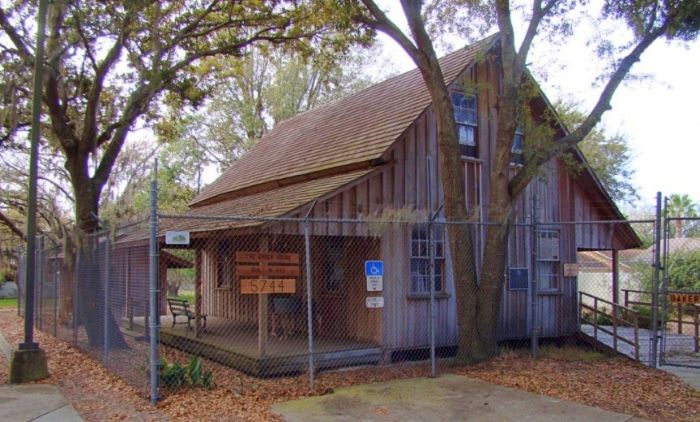 Baker House Side View
Open to the public as a museum, it offers a rare, tangible glimpse into 19th-century rural life. This is a slice of Florida history that’s easy to miss if you don’t know what to look for.
HISTORICAL SIGNIFICANCE
The Baker House was constructed by Samuel Baker, who, along with his wife Elizabeth Pinder Baker, settled on land they purchased in 1880.
Samuel had a diverse background as a mariner and sponge-boat operator. His knowledge left an imprint on the home’s craftsmanship.
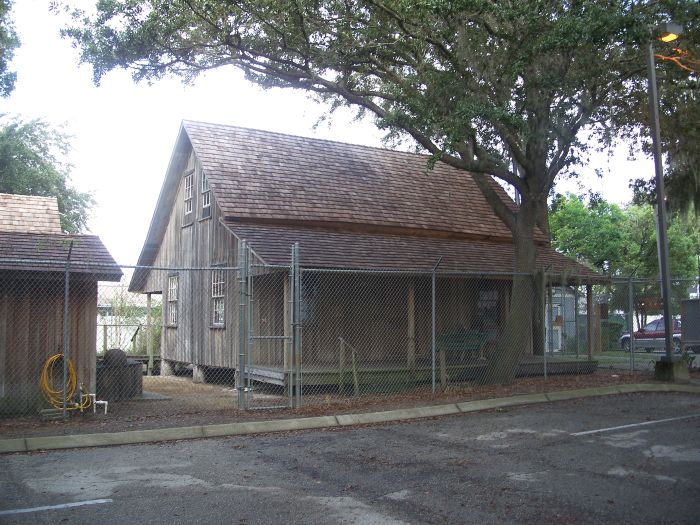 Baker House Front View
The building combines traditional Florida cracker carpentry with shipwright techniques: its walls are formed by vertically placed boards with no conventional studs, joined much like a ship’s hull, and its symmetrical layout features a central “dogtrot” hall.
The original kitchen, like many of its day, stood separate as a distinct building. The original kitchen building is gone and has been replaced by a modern reconstruction beside the house.
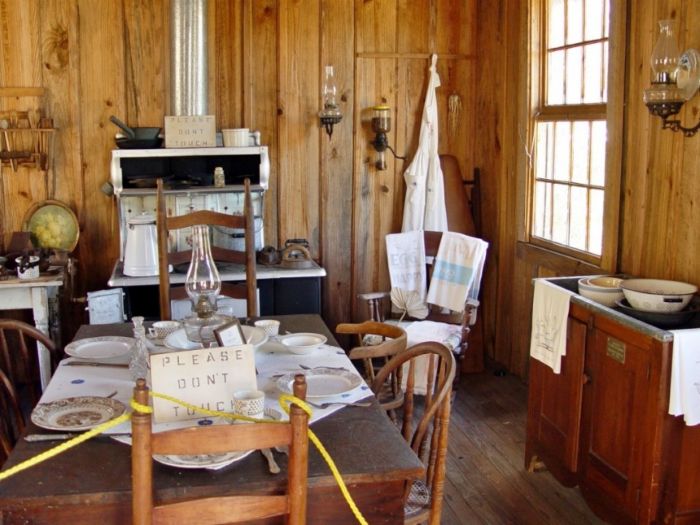 Baker House Kitchen
After Samuel’s death in 1898, the property passed through several owners. In 1937 it became part of a dual-house property known as the “Anderson-Baker House,” when Charles B. Anderson built an adjoining residence.
By the 1980s, the county purchased the land and renamed it Centennial Park. A dedicated restoration effort was launched in 1989 and, aided by memories from longtime locals, the house was carefully restored to reflect its original 1880s design.
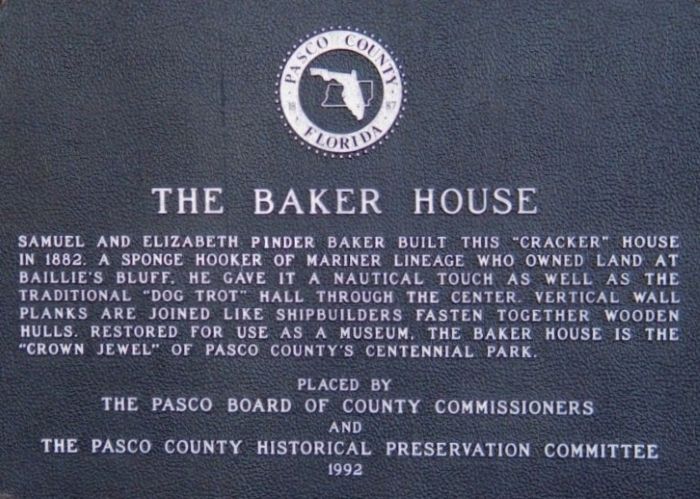
On February 13, 1993, the Baker House was rededicated, and just four years later, on February 14, 1997, it was officially listed on the National Register of Historic Places, cementing its status as a historic landmark.
VISITING DETAILS
You’ll find the Baker House at 5744 Moog Road in Elfers, just behind the library in Centennial Park, not far from Holiday, New Port Richey, and Tarpon Springs.
The museum opens to the public on the third Saturday of each month from October through May, typically between 9:00 a.m. and 1:00 p.m.
For those seeking a guided group tour at another time, arrangements can be made by contacting the local caretakers through the phone numbers listed with the house's on-site signs.
Visitors should allow themselves a little extra time to appreciate not only the house’s exterior but its unique construction details: the hand-pegged, half-lapped framing, the vertical plank walls, and the central dogtrot hall.
These features provide quiet, eloquent testaments to early Florida life. Bring a camera, a bit of curiosity, and perhaps a willingness to imagine what life was like in this part of Pasco County in the 1880s.
LOCATION MAP BAKER HOUSE, ELFERS, FLORIDA

Florida is the fastest-growing state in the United States and also the fastest-changing. If you see anything in this article that has changed or is in error, please let me know.
Thousands of Florida fans subscribe to our free daily Ezine, Florida Heritage Travel and we have 130,000 followers on Facebook.
By Mike Miller, Copyright 2009-2026
Florida-Back-Roads-Travel.com
Florida Back Roads Travel is not affiliated with or endorsed by Backroads, a California-based tour operator which arranges and conducts travel programs throughout the world.