- Home
- Florida Towns
- St Augustine
- Hotel Ponce de Leon
HOTEL PONCE DE LEON
Ancient City Icon Now Part of Flagler College
By Mike Miller December 11, 2025
My favorite place to visit in Florida is Flagler College in St. Augustine. It is in a complex of hotel buildings that the college helped preserve. That complex was the Hotel Ponce de Leon and is now called Ponce Hall.
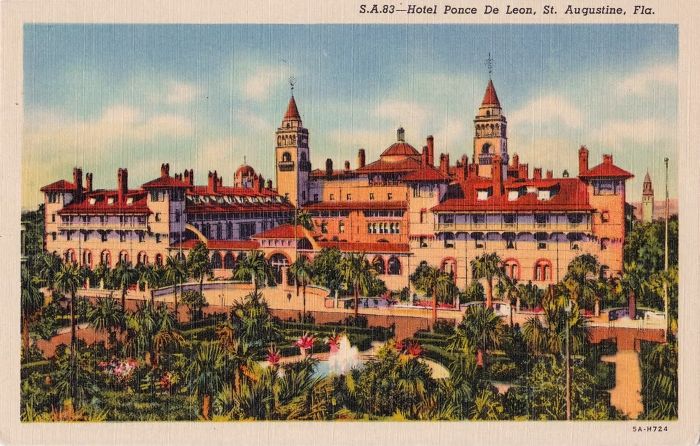
The hotel is a magnificent place where several big stories in Florida history all collided at once:
- The Spanish “Ancient City” and its future
- Gilded Age resort boom in Florida
- Rise of the Florida East Coast Railway
- Hotel military service in World War II
- Declining visitors, financial problems, and closure
- Rescue by historic preservation and higher education.
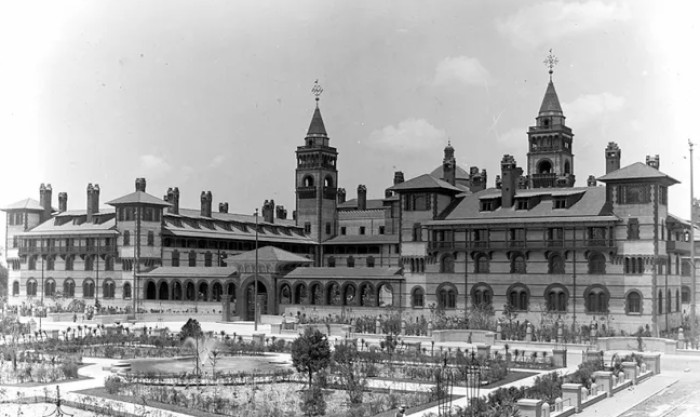 Hotel Ponce de Leon Near Opening
Library of Congress
Overview of Hotel Ponce de Leon
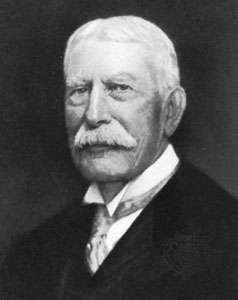 Henry M. Flagler
The hotel was designed and built between 1885 and 1887 by Standard Oil co-founder Henry M. Flagler as a winter palace for wealthy Northerners.
The 540-room hotel was a technological showpiece of poured concrete, electricity by Thomas Edison, and lavish interiors by Louis Comfort Tiffany.
Closed as a hotel in 1967 and reborn in 1968 as the core of Flagler College, the building has since become a National Historic Landmark and a case study in long-term preservation.
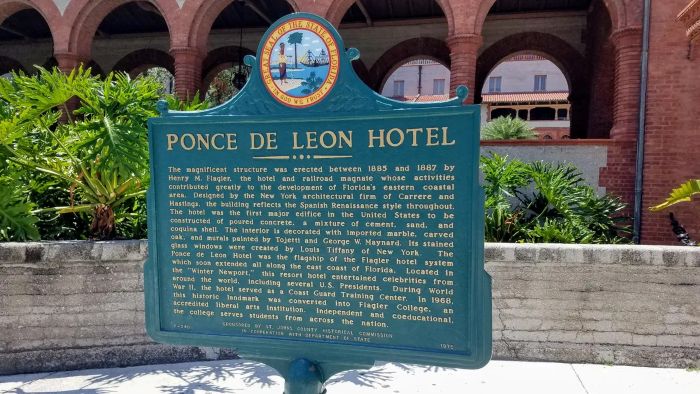 Hotel Ponce de Leon Historical Marker
When Henry Flagler visited St. Augustine in the early 1880s, he saw both the romance of the “Ancient City” and its shortcomings as a resort destination: limited accommodations, poor transportation, and an economy that faded with the short winter season.
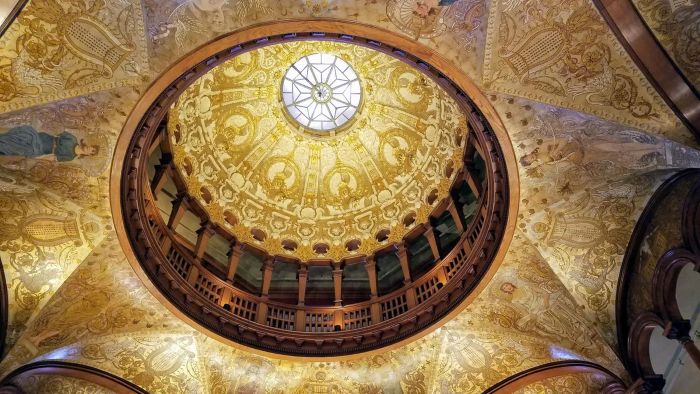 Hotel Ponce de Leon Rotunda
Inspired in part by Franklin W. Smith’s poured-concrete Villa Zorayda a few blocks away (now a museum), Flagler decided to build a grand winter hotel that would honor St. Augustine’s Spanish heritage while offering the latest in comfort.
Design and Construction of Hotel Ponce de Leon
The land where the Hotel Ponce de Leon now stands was partly an orange grove and partly salt marsh with a small creek, owned by Dr. Andrew Anderson, whose Markland house still stands just to the north.
Flagler purchased and filled the marshy site with sand. He then hired John Merven Carrère and Thomas Hastings, young Beaux-Arts-trained architects in New York. The hotel was their first major project.
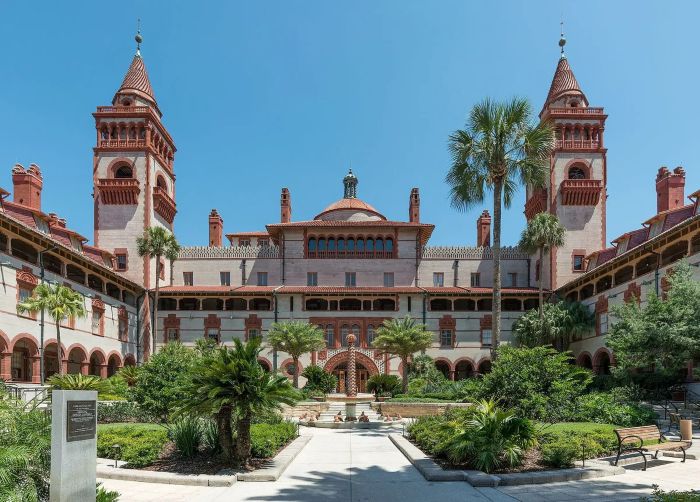 Hotel Ponce de Leon Courtyard
Their Spanish Renaissance-influenced design, with its U-shaped courtyard, twin towers, and richly articulated façades, launched a partnership that would later produce the New York Public Library and other landmarks.
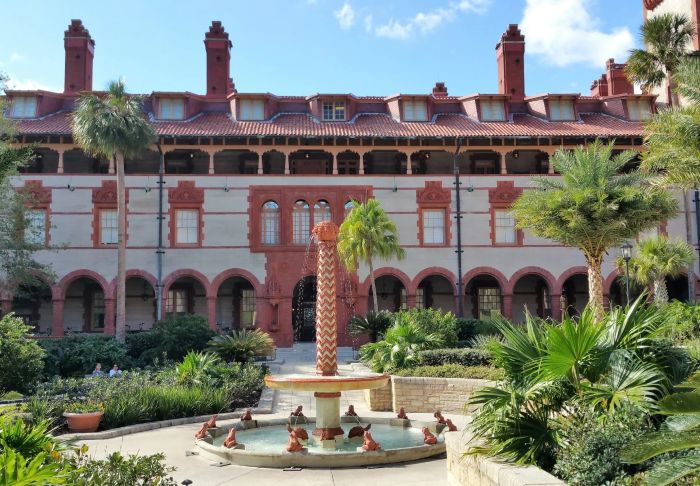 Hotel Ponce de Leon Courtyard and Frog Fountain
He also hired civil engineer Frederick W. Bruce to design a “floating” foundation suited to the deep sand that had been used to fill the site.
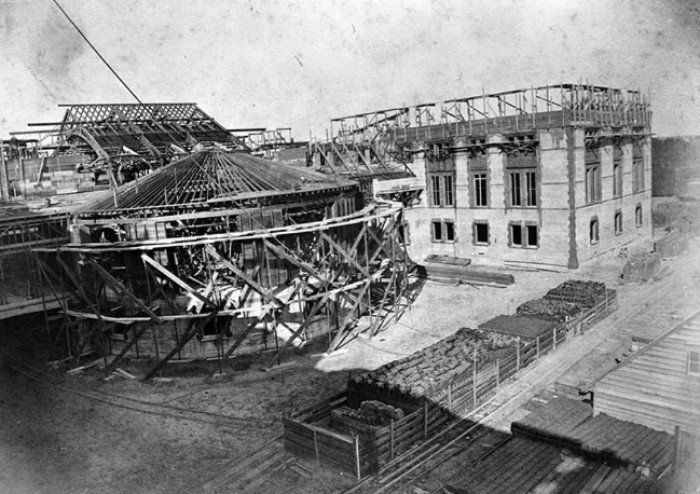 Hotel Ponce de Leon, Construction of Rotunda
Library of Congress
Finally he hired New England contractors (and former shipbuilders) James McGuire and Joseph McDonald and he was ready to go.
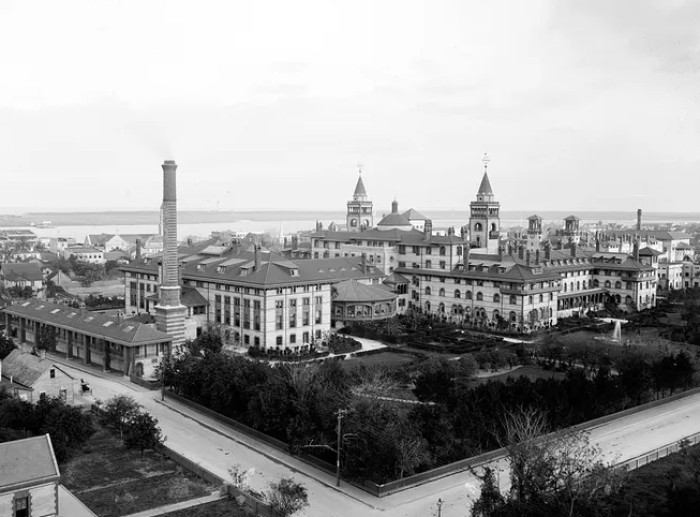 Hotel Ponce de Leon Shortly After Completion
Library of Congress
Construction began in 1885. Flagler’s new hotel, named for the Spanish explorer associated with the mythologically “Fountain of Youth,” opened to enormous fanfare in January 1888.
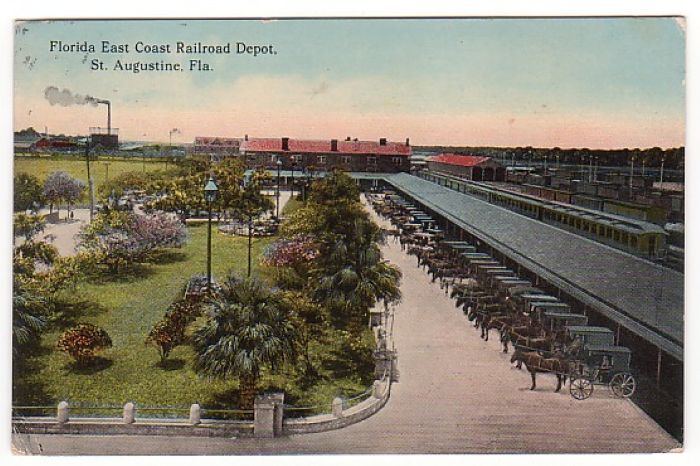 St. Augustine FEC Railway Station
Trains transported guests from the North directly to a St. Augustine railroad station located on King Street a short distance from the hotel. Horse drawn carriages took the guests and their luggage from the station to the hotel.
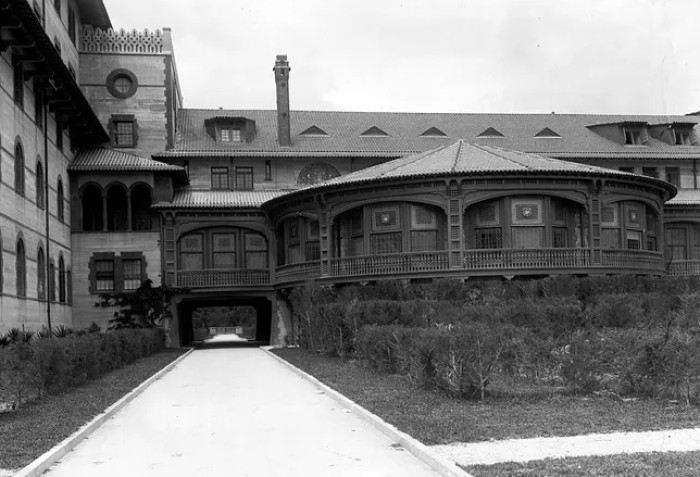 Hotel Ponce Dining Room Exterior Shortly After Opening
Library of Congress
Inside, Louis Comfort Tiffany’s stained glass, murals by George W. Maynard and Virgilio Tojetti, and New York furnishings by Pottier & Stymus wrapped visitors in Gilded Age luxury. To put it mildly, this was not a Holiday Inn Express.
Many guests came down for the entire season (January through Easter) and paid $4000 for room and meals for the season. That is in 1888 dollars would be about $150,000 in today's dollars or about $1500/day (based on my assumptions and calculations).
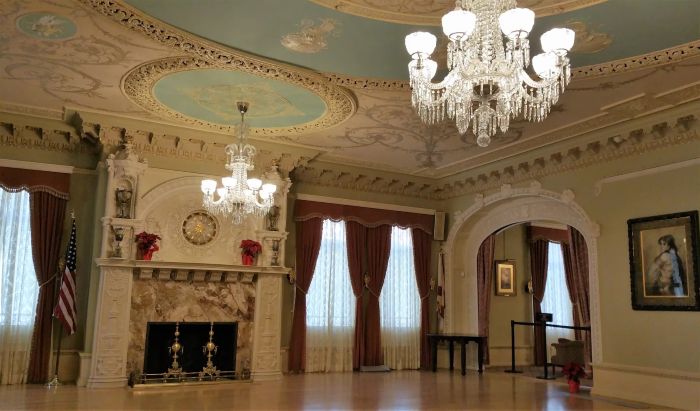 Hotel Ponce de Leon Grand Parlor
In other words, staying at the Hotel Ponce de León was not simply a hotel stay: it was the Victorian equivalent of booking a room at one of today’s most exclusive luxury resorts, a place reserved for America’s wealthiest winter visitors seeking elegance, comfort, and social prestige in Old Florida.
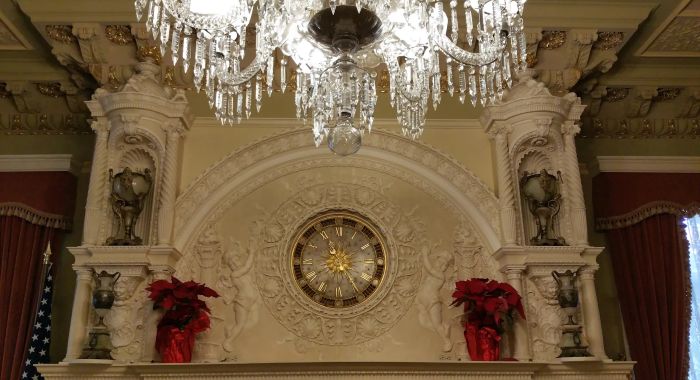 Hotel Ponce Grand Parlor Clock
Designed and Built by Thomas Edison
The hotel was a seasonal resort, only open for guests from January through Easter.
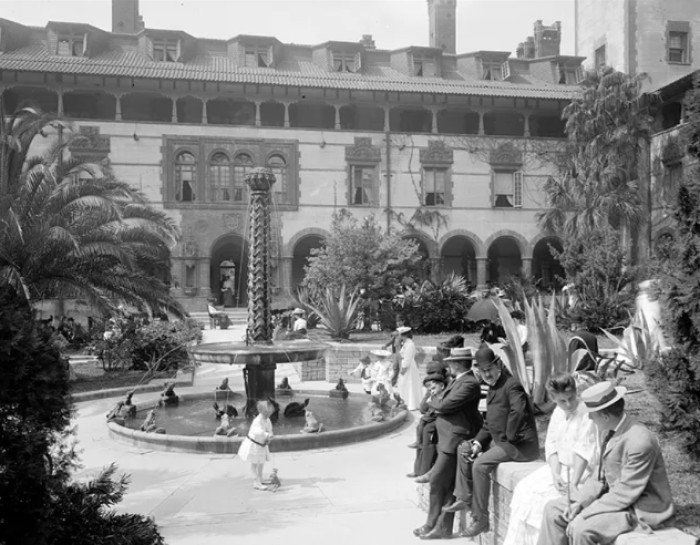 Hotel Ponce de Leon Courtyard 1905
Library of Congress
The hotel quickly became the social and economic heart of Flagler’s growing St. Augustine resort empire, drawing high-society guests whose spending supported local shops, carriage services, and a growing class of seasonal workers.
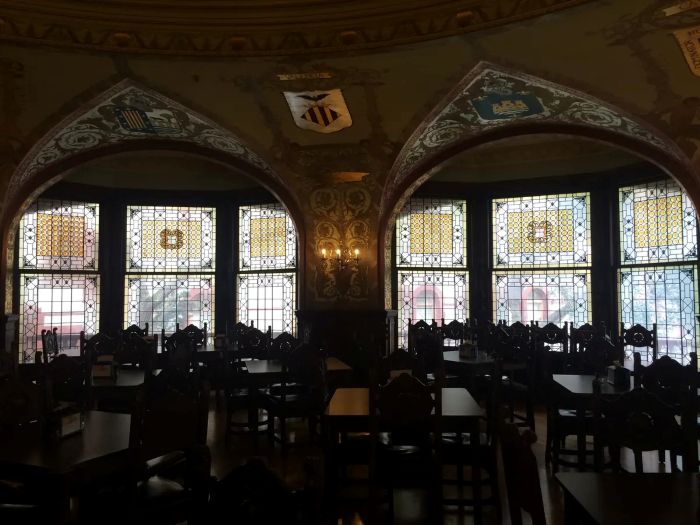 Hotel Ponce de Leon Dining Hall
Flagler also created an artist colony at the hotel with a separate Artist's Studio. The colony attracted many future great artists to spend some time there.
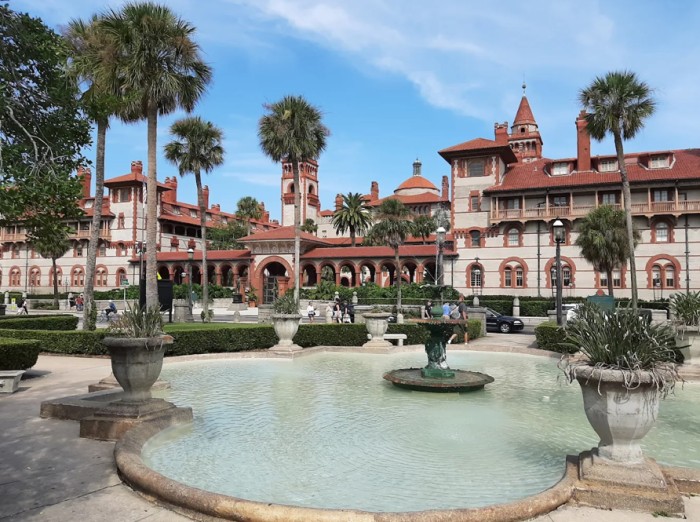 Hotel Ponce de Leon
Some of the famous people who stayed here include Presidents Grover Cleveland, Teddy Roosevelt, Warren G. Harding, and Lyndon B. Johnson. Baseball great Babe Ruth stayed here as well as 13 year old future president John F. Kennedy. Mark Twain stayed here more than once.
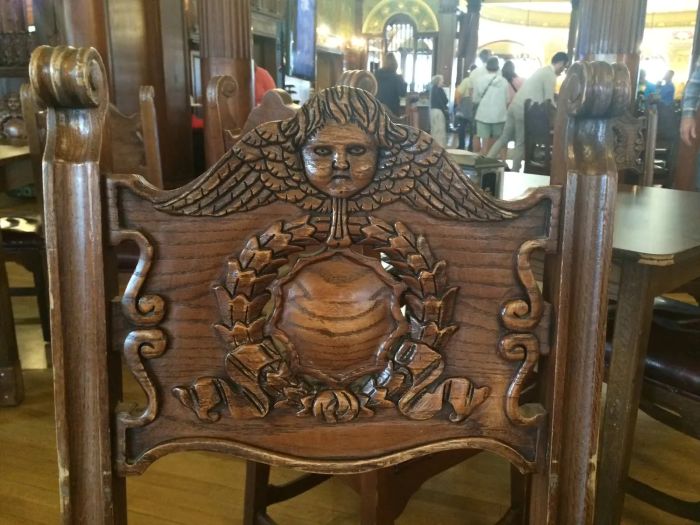 Hotel Ponce de Leon Dining Hall Chair
The Story of the Hotels Alcazar and Cordova
Flagler commissioned and built the Hotel Alcazar as his second hotel in St. Augustine, completed and opened in 1888–1889. It started as a planned entertainment annex to the Ponce de Leon but expanded into an independent luxury resort hotel.
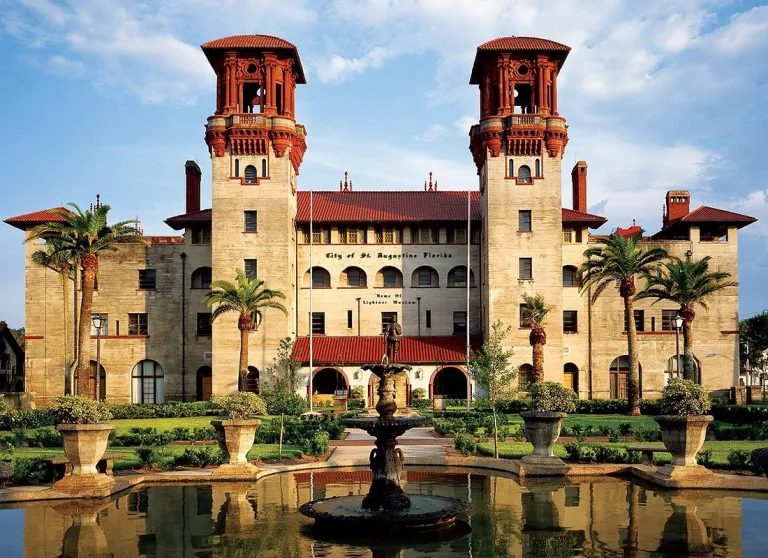 Hotel Alcazar
Its purpose emphasized health, wellness, recreation, and entertainment, with features like an indoor swimming pool, steam rooms, Turkish baths, gymnasium, bowling alley, tennis courts, and a casino (social/leisure space).
It complemented the grander Ponce de Leon by offering indoor amenities and enjoyment in Florida's climate, while accommodating overflow guests.
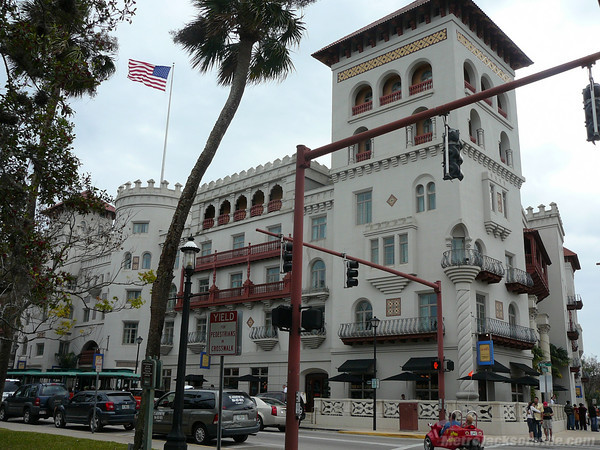 Casa Monica Hotel, formerly Hotel Cordova
Flagler did not originally build the Hotel Cordova; he purchased the existing Casa Monica Hotel (opened in early 1888 by Franklin W. Smith) later in 1888, renovated it, and renamed it the Cordova.
He later connected it to the Alcazar via a bridge in 1902, rebranding it as the Alcazar Annex. Its purpose was to provide additional luxury accommodations for affluent winter tourists, absorb overflow from the Ponce de Leon and Alcazar, and expand Flagler's hotel complex in St. Augustine.
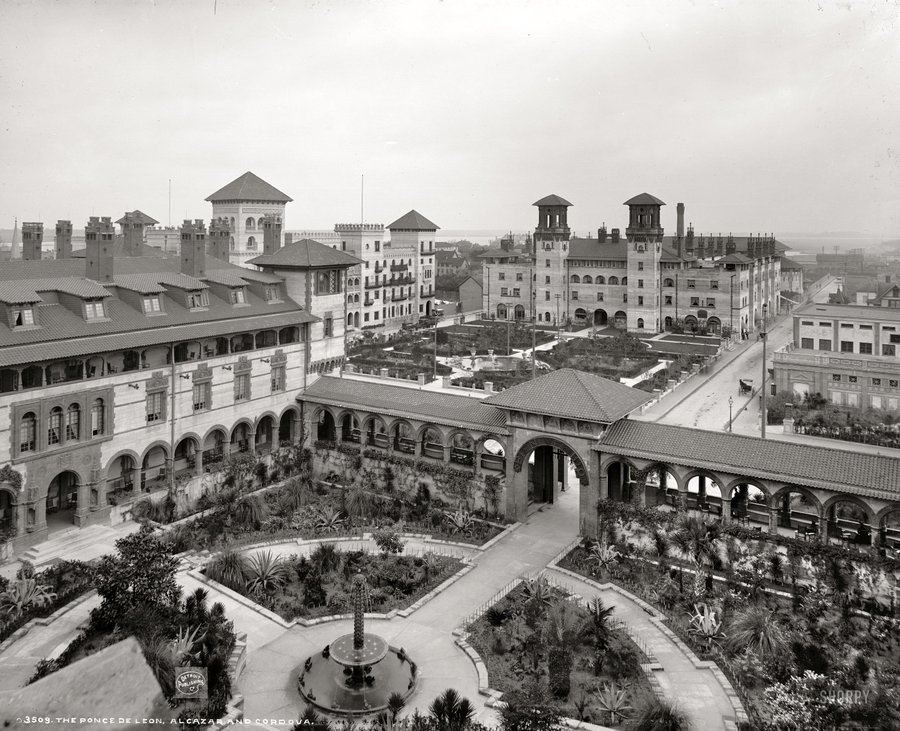 View to South from Hotel Ponce de Leon Courtyard
to Hotel Alcazar and Hotel Cordova
Both hotels formed part of Flagler's vision to create an "American Riviera" in Florida, attracting elite vacationers escaping northern winters.
The Alcazar now houses the Lightner Museum and St. Augustine City Hall; the Cordova is now the restored Casa Monica Resort & Spa, a great place to stay while visiting St. Augustine.
Hotel Ponce de Leon Technological Innovations
Beyond its role in tourism and Gilded Age glory, the Ponce de Leon is a milestone in American building technology:
- Poured concrete pioneer: The Ponce was the first large multi-story building constructed of poured concrete in the United States. It used a mix of imported Portland cement, sand, and crushed coquina from nearby Anastasia Island. Workers poured the concrete in three-inch lifts into wooden forms, creating monolithic walls up to two feet thick.
- Engineered marshland: To build on a former salt marsh and creek, crews filled the site with sand and used a “floating” foundation rather than deep pilings. If the building were ever going to settle, it was designed to settle all at once so there would be no cracking or failure.
- Early electrification: From the start, the hotel was wired for electric lighting. Henry Flagler's friend Thomas Edison’s company supplied four steam powered direct-current dynamos and thousands of light bulbs, making the Ponce one of the nation’s earliest large electrified buildings. This predated many public and government structures in the United States.
- Potable Water Improvements: A 12 inch diameter well was drilled to a depth of 1390 feet. The well provided 10 million gallons of fresh water each day under natural artesian pressure strong enough to shoot the water 42 feet high. This water served not only the hotel but the Alcazar Hotel as well. The hotel’s twin towers doubled as water tanks. This was an innovation that blended infrastructure and architecture.
- Rail and road connections: The hotel’s King Street façade fronted one of St. Augustine’s primary east-west routes, long before today’s automobile era. Flagler’s nearby rail depot funneled winter tourists into the city. A statue of Henry Flagler, originally at that station, now stands in front of the hotel’s main gate.
Hotel Ponce de Leon in Later Years
Henry Flagler decided to extend his railroad south along Florida's Atlantic coast and develop other resorts along the route. He eventually brought the railroad all the way south to Key West.
This had the unintended consequence of hurting the Hotel Ponce de Leon as many tourists decided to cut their St. Augustine vacations short and go on south to Palm Beach, Miami, and Key West.
The number of visitors began to decline in the early 1900s and got even worse at the end of the 1920s due to the bust of the Florida real estate boom and the onset of the Great Depression.
The reduced number of tourists caused the Alcazar and Cordova Hotels to close, but the Ponce hung on.
In World War II, the Ponce’s massive, durable structure made it an ideal Coast Guard training center and headquarters for Coast Guard Reserve training on the Atlantic coast, further tying the building to national infrastructure and defense history.
The Coast Guard deactivated the hotel after the war ended, and the Ponce became a hotel again. Business picked up for awhile, but it was not enough to make a huge difference.
The number of visitors continued to decline and the hotel was permanently closed in 1967. I was one of many Floridians who felt incredibly sad when this happened. I was afraid it would be demolished and replaced with modern condominiums.

A Personal Memory of Hotel Ponce de Leon
I was discharged from the Navy in early 1962 and went to work for a Jacksonville chemical Company. December 31 of that year was New Year's Eve and the company sprang for a big employee party at the Hotel Ponce de Leon.
We enjoyed a great dinner, musical entertainment, and a free room for the night. The bed was comfortable, but I recall thinking the place needed refurbishment. A few years later -in 1967 - the hotel closed its doors and went out of business.
This depressing fact was on my mind in late 1967 as I visited a former Navy shipmate who had bought a bar on Anastasia Boulevard close to the east end of the Bridge of Lions. I asked him why he had picked this particular bar to buy.
He told me the hotel was less than one mile away and was going to be turned into a girl's college. He expected hundreds of sailors from Jacksonville would flock to his bar to try to hook up with college girls.
My old Navy buddy was right about the hotel becoming a girl's college. Thank heaven for little girls and Flagler College (it became coed in 1971). I don't know if the sailors flocked to my friend's bar.
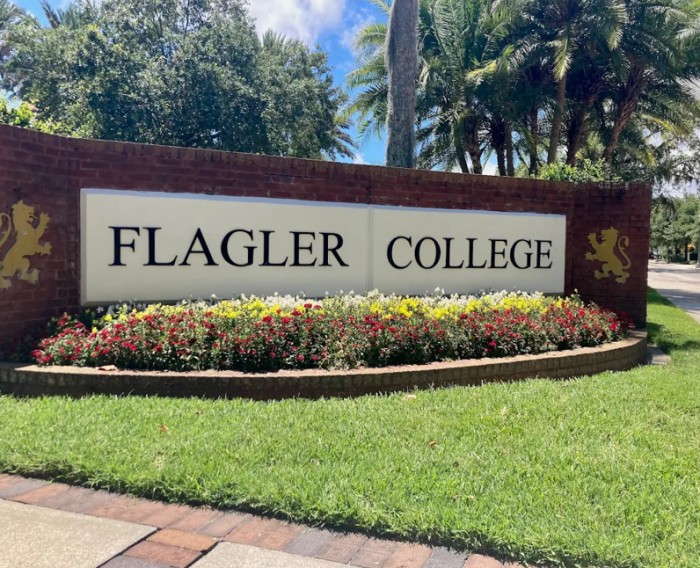 Flagler College Sign
Flagler College’s occupation of the former hotel is what - in my opinio - saved the hotel.
From its opening in 1968, the college committed to using the Ponce as an active campus building with classrooms, dormitory rooms, dining hall, and more while also restoring its historic fabric.
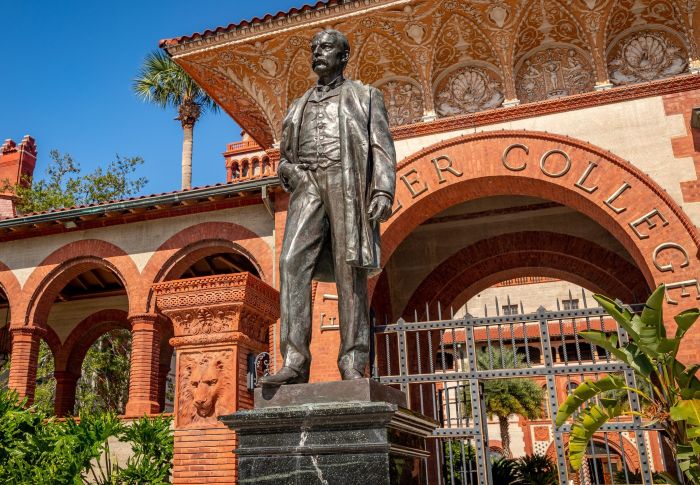 Statue of Henry Flagler at Flagler College Entrance
Since the 1970s, restoration campaigns have repaired roofs and towers, conserved Tiffany glass and murals, and returned many spaces to their 19th-century appearance.
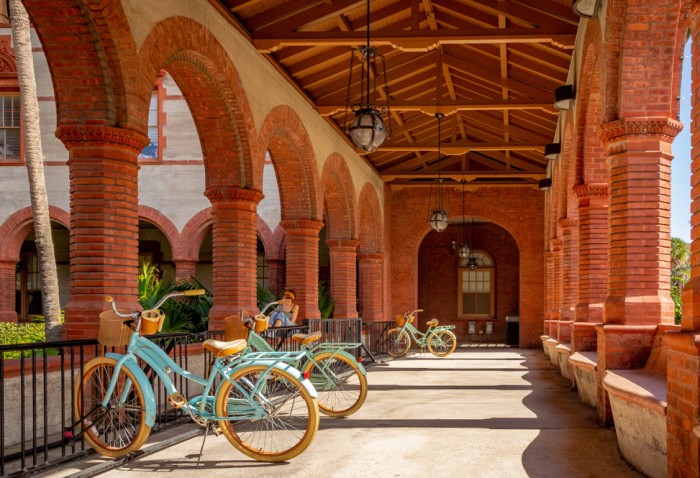 Flagler College Bike Parking Area
Preservation work documented by Dr. Leslee Keys and others notes that more than $50–60 million has been invested in restoration and rehabilitation up until the present time.
This has hopefully set a precedent for large-scale adaptive reuse of other historic resort hotels in Florida.
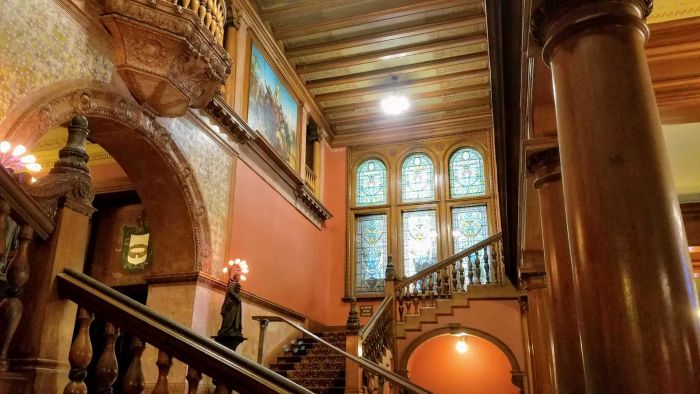 Hotel Ponce de Leon Stairway
Dr. Keys is a historic preservationist and the author of "Hotel Ponce de Leon: The Rise, Fall, and Rebirth of Flagler's Gilded Age Palace."
She has been a Flagler College faculty member and has abundant information about the incredible art and details of the hotel. Our website only scratches the surface of what her book covers. This book has a permanent place in my library.
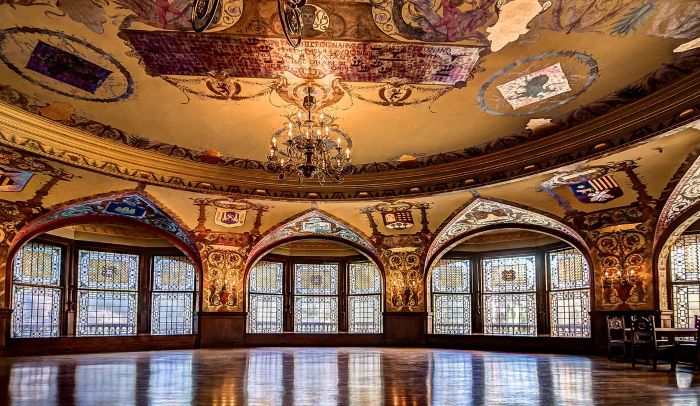 Hotel Ponce de Leon Dining Hall
Public access has grown through Flagler’s Legacy tours and, more recently, interactive exhibits in the rotunda and courtyard that interpret the building’s art, architecture, and social history, including its World War II Coast Guard chapter.
At the same time, the hotel’s story is regularly highlighted in regional cultural programming, from the Lightner Museum’s exhibitions on St. Augustine’s art colony to heritage-tourism campaigns that feature the Ponce as a signature stop in the city’s historic district.
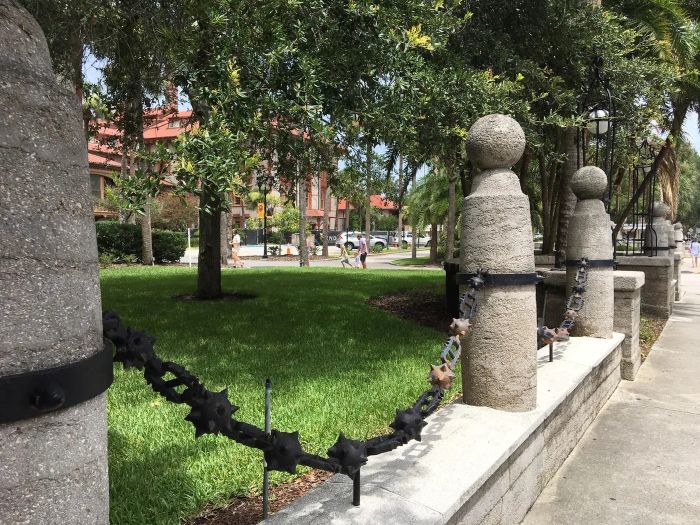 Hotel Ponce de Leon Yard Border
Cultural Traditions, Folklore & Local Color
The Hotel Ponce de Leon has always traded on atmosphere and mystique as much as amenities. Here are a few stories:
- The Tiffany glow: The dining hall’s 79 Tiffany stained-glass windows and surrounding murals bathe the room in colored light. It is described in tour materials as one of the largest surviving collections of Tiffany glass in a single location.
- The “shocking” hotel: Early guests, unused to electricity, were wary of the new technology. The hotel hired staff simply to operate the light switches because patrons were afraid to touch them.
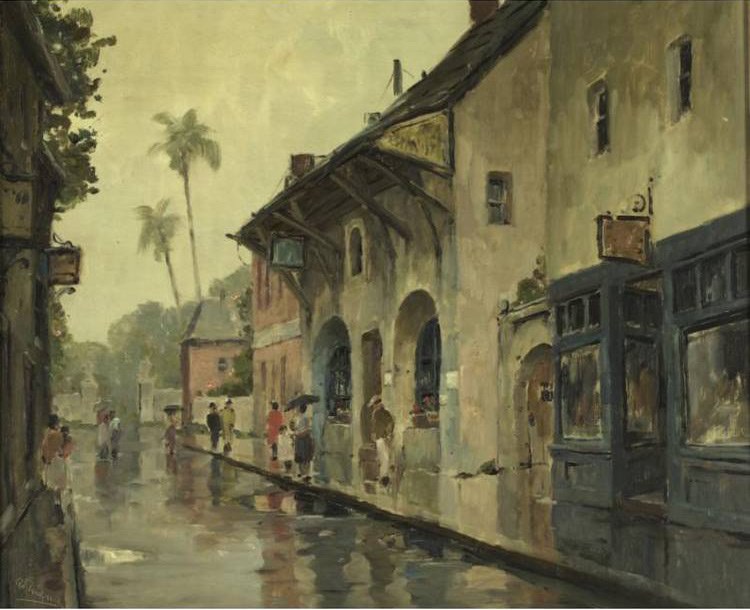 St. George Street by Anthony Thieme
- Artists’ colony: Flagler’s decision to build an Artists’ Studios wing created a social hub where guests could visit working studios, purchase paintings, and mingle with artists at work. Modern critics and art historians emphasize how this feature helped make St. Augustine a leading American art colony between the 1890s and mid-20th century.
- Ghost stories: Modern popular accounts and tour companies often describe the former hotel as haunted, weaving tales of long-gone guests and staff into nighttime walking tours.
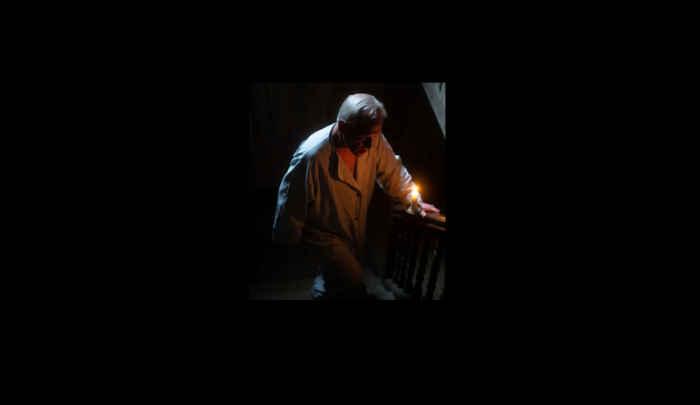 Grok Ghost
- Some even claim the ghost of Henry Flagler visits now and then. While these stories are folklore rather than documented history, they show how the building’s age, opulence, and imposing presence stimulate imaginative storytelling.
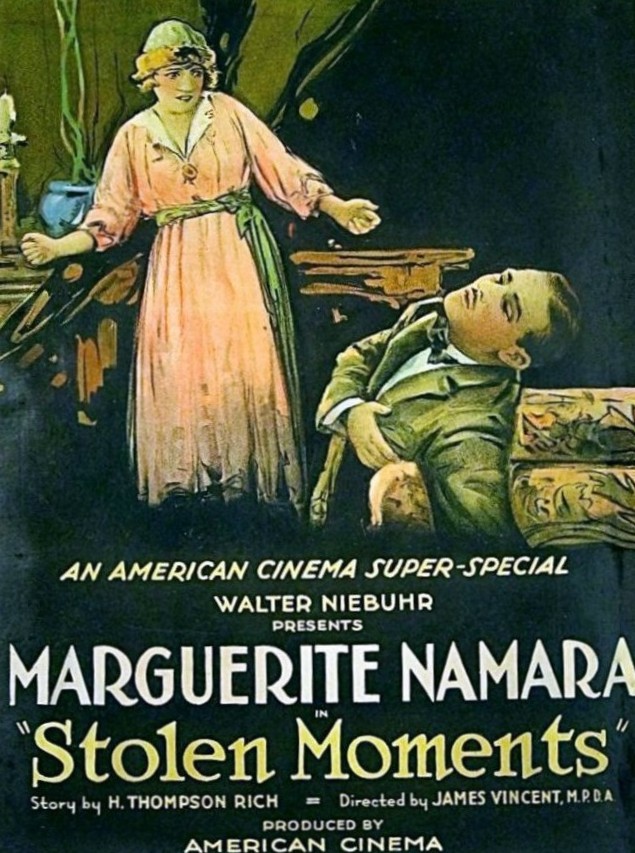 Stolen Moments Poster
- Movie lore: The 1920 silent film Stolen Moments, starring Rudolph Valentino, was partially filmed and set in the Ponce de Leon Hotel and its courtyard.
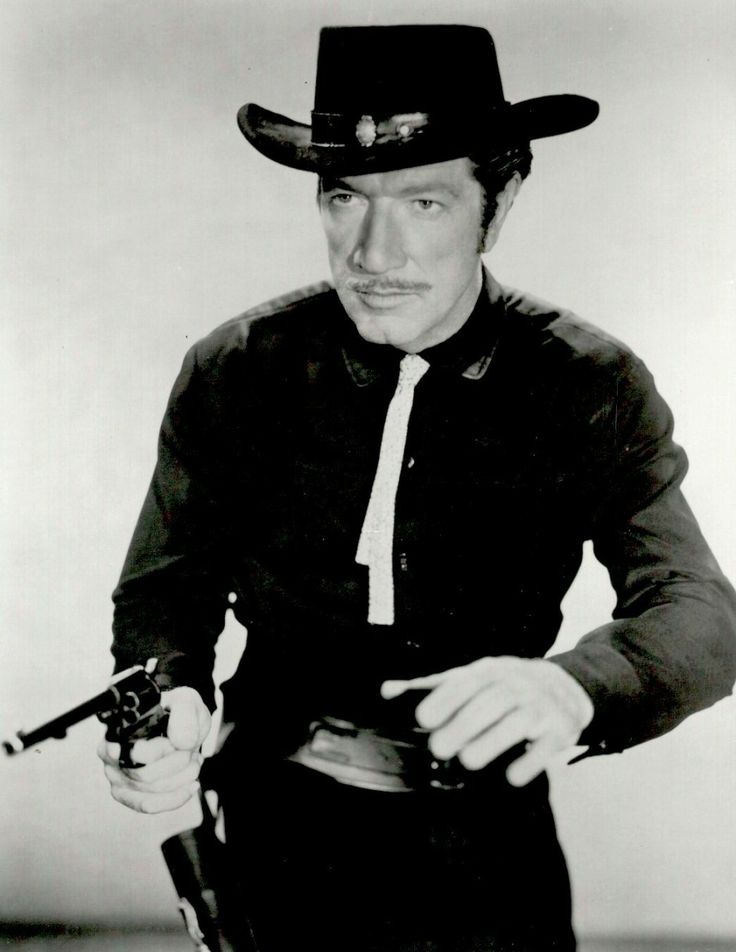
- Richard Boone was a well known actor. Among his roles was that of Paladin in the popular television series "Have Gun Will Travel." After his retirement from the movie business he moved to St. Augustine in 1970 and taught acting classes at Flagler College. He lectured on advanced acting. Boone died in 1981.

- Route 66, Season four, Episode 19, titled "This Is Going to Hurt Me More Than It Hurts You", was filmed at the Hotel Ponce de Leon. I wonder if the hotel had a valet who took good care of the Corvette? I also wonder if Tod and Buz visited my buddy's saloon? Damn, I'm old. I remember this series from 60 years ago like it was yesterday.
Together, these layers of art, innovation, and myth have made the Ponce more than a building; it’s a stage on which St. Augustine’s identity as the “Ancient City” gets performed for each new generation.
For me, it's also a flashback to my New Year's Eve adventure more than 60 years ago.
Enjoy a Virtual Tour of Hotel Ponce de Leon
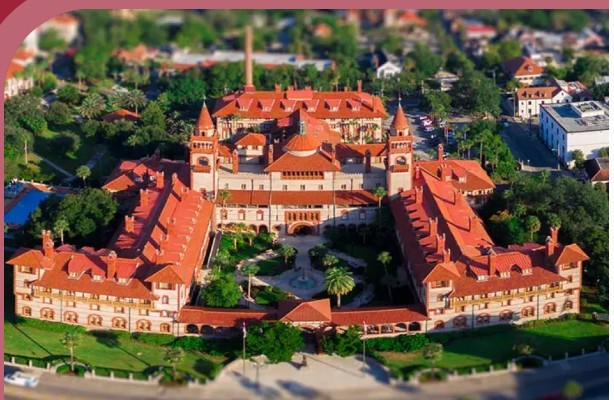
Schedule a Tour In Person and See For Yourself
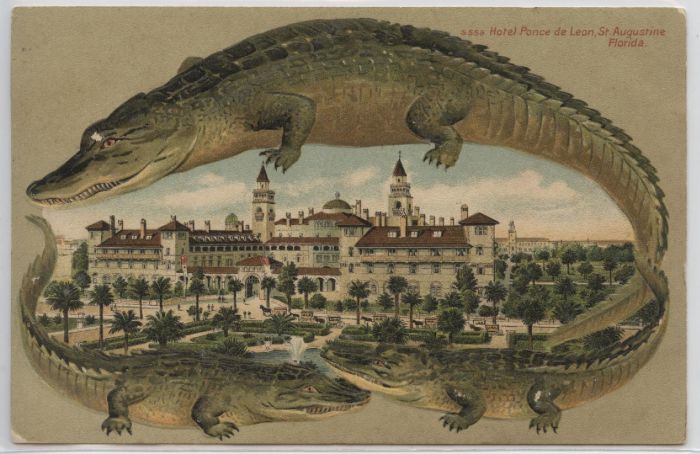
FLAGLER COLLEGE WEBSITE
FOR HISTORIC TOUR INFORMATIOON
FLAGLER COLLEGE LOCATION MAP

Florida is the fastest-growing state in the United States and also the fastest-changing. If you see anything in this article that has changed or is in error, please let me know.
Thousands of Florida fans subscribe to our free daily Ezine, Florida Heritage Travel and we have 130,000 followers on Facebook.
By Mike Miller, Copyright 2009-2026
Florida-Back-Roads-Travel.com
Florida Back Roads Travel is not affiliated with or endorsed by Backroads, a California-based tour operator which arranges and conducts travel programs throughout the world.