- Home
- Florida Towns
- Gainesville
- Historic Haile Homestead
HISTORIC HAILE HOMESTEAD
AT KANAPAHA PLANTATION
By Mike Miller November 28, 2025
OVERVIEW
Historic Haile Homestead at Kanapaha Plantation is on 40 acres in Gainesville, Florida. Built in 1856, it anchors a preserved 19th-century cotton plantation.
The 6,200-square-foot home features heart pine construction and cypress siding. It includes a music room, parlor, and outbuildings.
The site highlights Florida Cracker family life and enslaved labor. The "talking walls", inscribed with over 12,500 words written by family and guests, draws visitors.
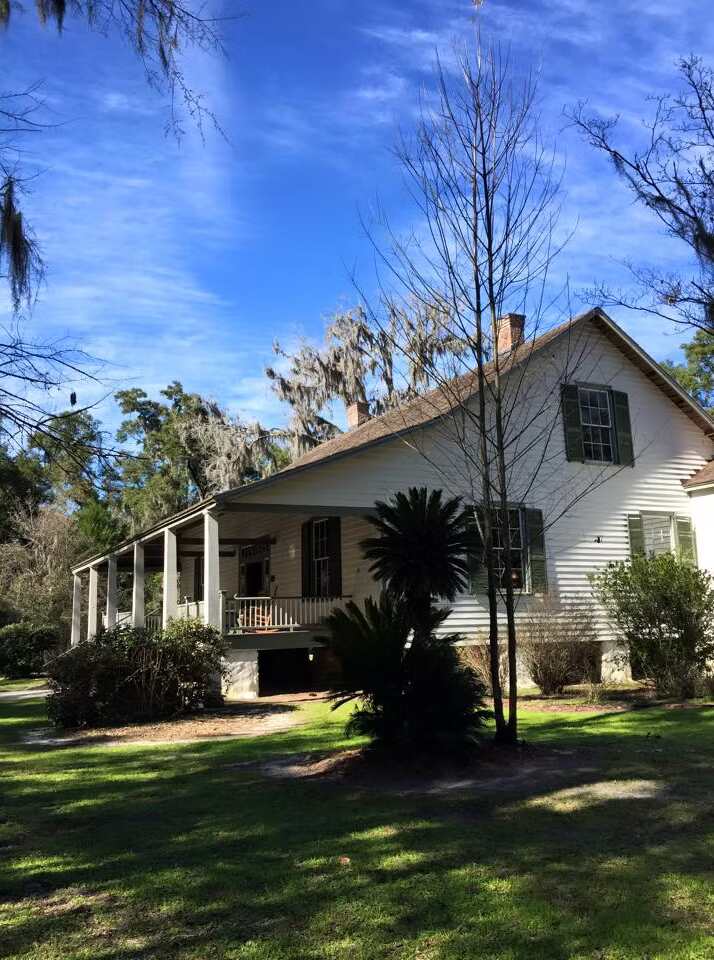 Historic Haile Homestead at Kanapaha Plantation
The homestead demonstrates antebellum North Florida agriculture.
HISTORICAL SIGNIFICANCE
In 1854, Thomas Evans Haile and his wife, Esther "Serena" Chesnut Haile, moved from Camden, South Carolina, to Alachua County, Florida.
They established a 1,500-acre Sea Island cotton plantation named Kanapaha, meaning "small thatched houses" in Seminole.
The family arrived with 56 enslaved laborers who built the home using braced frame construction and mortise-and-tenon joinery.
No professional architect designed it; rather, slaves and local carpenters created the vernacular style.
Enslaved craftsmen like carpenter Johnson Chestnut and stonemason Henry Gaines shaped fireplaces and piers.
The plantation thrived until the Civil War disrupted cotton markets. Post-war, the Hailes faced bankruptcy in 1868.
They shifted to diverse farming, growing oranges, vegetables, and pecans, and averted disaster. Thomas and Serena raised 15 children.
Starting with eldest son 7-year-old Ben Haile in 1859, over 12,500 words have been scrawled across the home's unpainted interior walls (in rooms, closets, and even the trunk room).
The youngest son, Evans Haile, inherited the property in 1896 after his parents' deaths. Evans, a Gainesville defense attorney, lived in town and hosted weekend parties, dances, and hunts at the homestead.
They were attended by some of Gainesville’s most distinguished citizens. Guests inscribed notes, recipes, and diary entries on the walls. This continued through the early 1900s.
It’s a quirky, one-of-a-kind archive of family life, visitors, recipes, and random musings unique enough to make the house nationally famous. No one knows exactly why the Hailes started (or encouraged) this habit.
By the 1930s, the house stood abandoned. In the mid-1970s, filmmaker and Florida resident Victor Nunez rediscovered it for his movie Gal Young 'Un, set in backcountry Florida.
It served as the primary filming location that brought its authentic 19th-century Cracker architecture to life on screen.
Directed by Nuñez, the movie was adapted from Marjorie Kinnan Rawlings' 1930s short story of the same name.
The setting is rural North Florida during Prohibition (late 1920s or early 1930s).
The homestead's weathered heart-pine walls, wide porches, and isolated setting perfectly captured the backwoods isolation central to the plot.
The movie gets a 7 out of 10 rating on IMDb. It might be worth a watch just to see the house.
In the late 1980s the Alachua Conservation Trust partnered with Haile descendants for restoration.
In 1986 the site was added to the U.S. National Register of Historic Places for its dual role in agriculture and vernacular architecture. The homestead opened to the public in 2001.
A book about the Homestead entitled "The Historic Haile Homestead at Kanapaha Plantation: An Illustrated History," written by Karen Kirkman and Kevin McCarthy is available for sale at the Homestead and on Amazon.
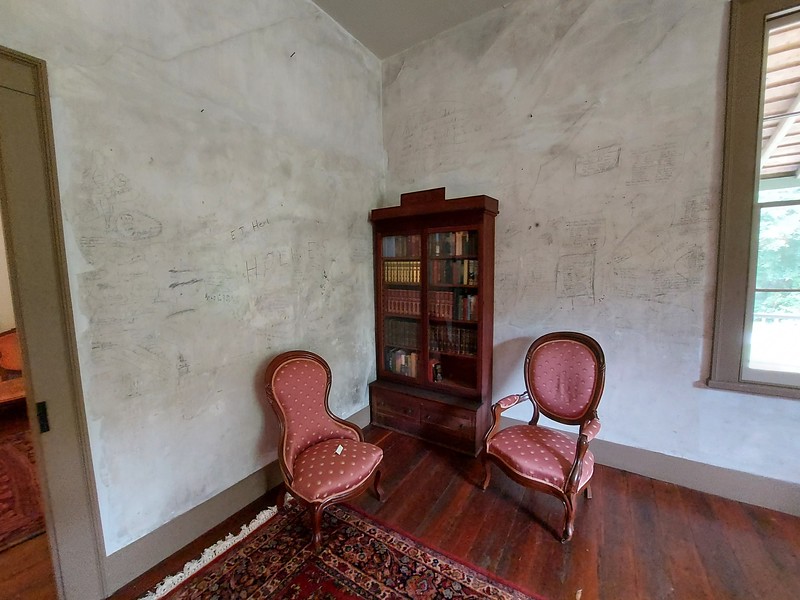 "Talking Walls" at the Historic Haile Homestead
The book includes rare pictures. The Homestead is also on the Alachua County Black Heritage Trail.
VISITING DETAILS
The Historic Haile Homestead at Kanapaha Plantation is at 8500 SW Archer Road, Gainesville, FL 32608. It’s 10 miles southwest of downtown via SR-24.
Open Saturdays 10 AM to 2 PM and Sundays noon to 4 PM. Park in the lot off Archer Road. The 1856 house is NOT air conditioned; the Visitors Center is.
You can take guided tours of the house, focusing on the talking walls. Learn the story of the house, the enslaved people who labored there, the Haile family and the parties held there in the early 1900s.
Walk the grounds to see outbuildings and gardens. Check their website for special events like Vintage Holidays in December when the house is decorated.
HISTORIC HAILE HOMESTEAD
AT KANAPAHA PLANTATION
LOCATION MAP

Florida is the fastest-growing state in the United States and also the fastest-changing. If you see anything in this article that has changed or is in error, please let me know.
Thousands of Florida fans subscribe to our free daily Ezine, Florida Heritage Travel and we have 130,000 followers on Facebook.
By Mike Miller, Copyright 2009-2026
Florida-Back-Roads-Travel.com
Florida Back Roads Travel is not affiliated with or endorsed by Backroads, a California-based tour operator which arranges and conducts travel programs throughout the world.